Call Center for Business: How to Know When You Need One
Every growing company reaches a point where keeping up with customers starts to feel like a losing race. Emails pile up, calls go unanswered, and the team that used to handle everything is suddenly stretched too thin. That is usually the moment a call center for business stops being a nice-to-have and becomes a real decision. The question is how to tell whether you have reached that point, or whether you are about to.
This guide walks through the clearest signs that your company needs dedicated support, what a call center actually delivers, and how to weigh building one in-house against outsourcing. The right call center solutions can absorb that pressure before it reaches your core team, but only if you set one up for the right reasons and at the right time. Here is how to know when that time has come.
- When a Call Center for Business Becomes a Real Necessity?
- Sign 1: Customer Queries Are Overwhelming Your Team Now
- Sign 2: Rapid Growth Is Straining Your Support Capacity
- Sign 3: In-House Support Costs Keep Climbing Every Month
- Sign 4: Client Expectations Are Rising Faster Than Ever
- What a Call Center for Business Actually Delivers to You?
- In-House vs Outsourced Call Center for Business Compared
- How Redial Helps You Launch the Right Support Model Now?
- Frequently Asked Questions About Call Center for Business
When a Call Center for Business Becomes a Real Necessity?
A call center for business becomes a real necessity when customer support starts limiting the rest of the company. The clearest sign you need a call center is that support has started to slow down everything else, from sales follow-ups to product work, because the same people keep getting pulled into customer issues. The stakes are higher than they look.
Research shows poor customer service quietly puts trillions of dollars at risk every year, as customers cut back or leave after a bad experience. VERIFY: Qualtrics via Forbes figure (Task 11). The flip side is just as striking: keeping a little more of your existing base pays off far more than most companies expect. The four signs below are the practical ways this shows up day to day.
It helps to think of these signs as a system rather than a checklist. Rarely does just one appear on its own. Volume tends to rise with growth, growth pushes up costs, and rising costs collide with rising expectations, so most companies feel several at once. That clustering is itself the signal: when support strain shows up in more than one place, patching a single symptom rarely fixes the underlying problem.
Sign 1: Customer Queries Are Overwhelming Your Team Now
The first and most common sign is volume. As your company grows, so does customer demand, and if your team is struggling to keep up with the rising number of queries, that is a direct signal. When people wait too long or messages slip through the cracks, the damage is not just one bad interaction, it compounds into churn and negative reviews.
A dedicated support operation handles a high volume of inquiries efficiently, giving each customer prompt, personalized attention. Just as importantly, freeing your team from queries lets them focus on core work and back-office support instead of being constantly interrupted. The result is a smoother operation on both sides, where customers get answers and your core staff get their time back.
There is also a quieter cost to being overwhelmed. When agents are buried, the quality of every interaction drops, not just the ones that go unanswered. Rushed replies, missed details, and a stressed tone all erode the experience, and customers notice. A dedicated team sized to the actual volume keeps that quality steady, because no single person is trying to do three jobs at once during a busy stretch.
Sign 2: Rapid Growth Is Straining Your Support Capacity
Rapid growth is exciting, but it is also the moment support tends to break. Growth is the moment support either becomes a strength or turns into your biggest bottleneck. With a fast-expanding customer base, keeping communication consistent gets harder, and the ad-hoc approach that worked at a smaller scale starts to crack.
A call center absorbs that surge without a drop in quality. By leaning on trained customer experience professionals, you can make sure every customer still gets personalized attention even as the numbers climb, which protects loyalty during exactly the phase when word of mouth matters most. Scalability is the point: a good support setup grows with you rather than holding you back.
Growth also changes what customers expect from you. A small startup gets forgiven for a slow reply, but the moment a company looks established, customers expect established-level service. That shift can happen faster than hiring can keep up, which is where a support partner earns its keep, since it can add trained capacity in weeks rather than the months an internal team would take to recruit and onboard.
Sign 3: In-House Support Costs Keep Climbing Every Month
Cost is the third sign, and it is often misread. An in-house team looks cheaper on paper until you add hiring, training, and turnover costs, plus the technology and management overhead that come with running support well. Those hidden costs add up quickly, especially when attrition means you are always training someone new.
This is where outsourcing changes the math. Customer service outsourcing turns a large fixed cost into a predictable variable one, letting you tap an existing infrastructure and trained team instead of building both from scratch. Why outsourcing customer service is often the best choice explains the cost logic in more depth, but the short version is that specialization plus scale usually beats doing it alone.
It is worth putting real numbers to this. Beyond salaries, an in-house operation carries recruiting fees, onboarding time, software licenses, quality management, supervisors, and the constant cost of turnover that plagues support roles. Each of those is easy to underestimate in isolation, and together they often double the headline salary figure. Outsourcing folds all of it into one predictable rate, which makes budgeting far simpler and usually cheaper overall.
Sign 4: Client Expectations Are Rising Faster Than Ever
The fourth sign is rising expectations. Customers now expect fast, personalized, always-available service, and the bar keeps climbing. When clients expect more than your current setup can deliver, the gap shows up as frustration, lower satisfaction, and lost deals.
A call center equips your company to meet that bar consistently. Skilled agents handle complex queries, resolve complaints, and provide clear information in a way that builds trust over time. The payoff is real, since keeping just 5 percent more customers can lift profits sharply, and good support is one of the most direct ways to keep them. VERIFY: Bain retention figure (Task 11).
Expectations are also shaped by whoever serves your customers best, not just by your industry. People compare every support experience to the best one they have had recently, from any company, so the bar is set externally and keeps rising. Meeting it consistently takes trained agents, the right tools, and enough coverage to answer quickly, which is difficult to sustain with a small internal team stretched across other duties.
What a Call Center for Business Actually Delivers to You?
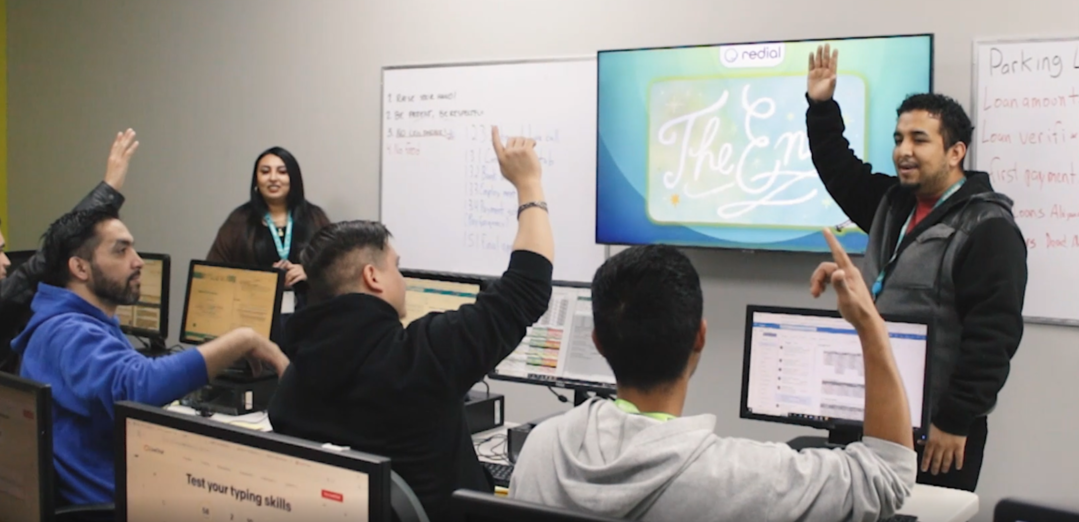
A call center for business delivers more than just answered calls. Modern contact center solutions cover phone, chat, email, and social in one connected system, so the benefits show up across the whole operation, not just in the support queue. The main advantages include:
- Lower, more predictable costs than an in-house team
- Faster response and resolution times across channels
- The ability to scale up or down as demand changes
- Access to trained agents and proven support technology
- More time for your core team to focus on the business
These benefits compound over time. A well-run support operation does not just resolve today’s tickets, it feeds back insight about what customers struggle with, which products generate the most questions, and where the experience breaks down. That information is valuable well beyond the support queue, informing product, marketing, and operations, which is part of why leading companies treat customer support as a source of intelligence rather than a cost to minimize.
Taken together, these benefits explain why support is best seen as an investment rather than a cost center. The real question is not whether to support customers, but how to do it without slowing down the rest of the business.
In-House vs Outsourced Call Center for Business Compared
Once you have decided you need one, the next choice is how to run it: in-house or outsourced. A call center for business can be built internally or handed to a specialized partner, and the two paths differ on cost, speed, scalability, and control. The table below lays out the trade-offs.
| Factor | In-house call center | Outsourced call center |
| Upfront cost | High: hiring, tech, facilities | Low: partner already has them |
| Setup time | Months to recruit and train | Weeks to go live |
| Scalability | Slow, tied to hiring | Fast, flex up or down |
| Cost model | Large fixed cost | Predictable variable cost |
| Control | Maximum, direct oversight | Shared, via the partner |
| Best for | Very specific, complex needs | Most growing businesses |
For most growing companies, outsourcing wins on cost and speed, while in-house offers maximum control at a much higher price. Nearshore outsourcing keeps costs low while staying in a close time zone, which is why it has become the middle path many businesses prefer. What to know before outsourcing call center services is a useful checklist before choosing a partner.
How Redial Helps You Launch the Right Support Model Now?
If the signs point to yes, the next step is choosing how to launch. Redial builds and runs call center operations for growing companies, handling the hiring, training, technology, and management so you do not have to. The advantage is speed and expertise: instead of spending months building support from scratch, you plug into an operation that already runs at scale. Reasons to outsource your call center operations covers the wider benefits of a partner.
The best partners also bring structure a young support function usually lacks: quality monitoring, clear escalation paths, performance reporting, and coverage across the hours your customers actually need. Building all of that internally takes time and expertise most growing companies would rather spend on their core product. Handing it to a team that does it every day removes a whole category of operational risk at the exact moment the business can least afford a support failure.
Think your business is ready for a call center?
Redial BPO builds nearshore and offshore support teams that scale with your volume, so you can deliver great service without building an operation from scratch. If any of the four signs sound familiar, we can help you figure out the right model for your business.
Contact us to talk through your support needs, or get a free quote for your specific use case.
Frequently Asked Questions About Call Center for Business
1. How do I know if my business needs a call center?
The clearest signs are that customer queries are outgrowing your team’s capacity, rapid growth is straining support, in-house costs keep rising, and client expectations are climbing. If two or more of these are true, a call center for business is usually worth evaluating. Each sign points to the same underlying problem: support has started to limit the rest of the business.
2. Is a call center worth it for a small business?
Often, yes. A call center for business lets a small company deliver professional, responsive support without hiring, training, and managing a full in-house team. Because an outsourced partner already has the infrastructure and staff, a small business gets enterprise-level coverage at a predictable cost, which is usually far cheaper than building it alone.
3. How much does a call center for business cost?
Costs vary by model, volume, and location, but outsourcing is usually cheaper than an in-house team once hiring, training, infrastructure, and turnover are included. An outsourced call center turns a large fixed cost into a predictable per-agent or per-contact rate, and nearshore or offshore delivery lowers it further without sacrificing quality.
4. What is the difference between in-house and outsourced call centers?
An in-house call center is built and run by your own company, giving maximum control but requiring heavy investment in staff, technology, and management. An outsourced call center uses a specialized partner’s existing infrastructure and team, which lowers cost, speeds up setup, and scales more easily. Most growing businesses choose outsourcing for the flexibility and lower total cost.
5. When is the right time to set up a call center?
The right time is before support problems start costing you customers, not after. If your team is missing queries, response times are slipping, or growth is outpacing your capacity to help people, those are signals to act. Setting up a call center for business early protects the customer experience during exactly the growth phase when it matters most.

Award winning marketing leader in brand, creative and digital with over 15 years of experience in SaaS, enterprise technology, and digital design. Transitioned from a programmer to UI/UX designer to a creative leader, successfully revitalizing global brand systems, leading award-winning campaigns, and building high-performing teams. Specialize in developing Figma-driven design systems, managing creative operations, and aligning brand storytelling with business strategy. Exceled at collaborating with sales, marketing, and product teams to execute cohesive brand experiences across campaigns, events, and platforms. Passionate about combining creativity and process to drive impact, efficiency, and engagement.