
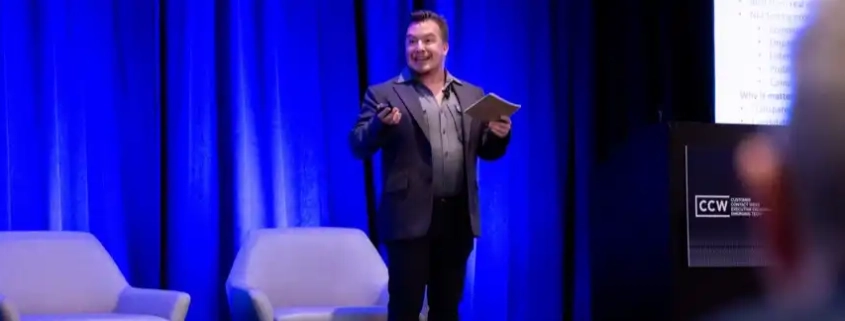

AI in the Contact Center: From Recruiting to Readiness
There is a question I ask every time we bring a new program to life at Redial BPO: How do we help agents practice real work before there is real risk? The contact center industry has wrestled with this for years. Too many agents walk into training unprepared for what the job feels like.
Too many coaches react to problems rather than prevent them. And too many promising candidates leave in the first week, not because they lacked potential, but because no one showed them the job before they started it. At CCW San Diego in February 2026, I shared how the Redial BPO team has been tackling this head-on.
We operate across Mexico, Costa Rica, South Africa, and the Philippines, supporting programs across customer service, inside sales, SDR, and collections. What I shared at CCW was not a roadmap for the future. It was a report from the field, backed by real numbers.
The Traditional Challenges We Set Out to Fix
Before we built this approach, we lived the same problems most contact center leaders know well. Hiring for skills is harder than hiring for years of experience. When you need someone with genuine empathy, strong listening, and calm composure under pressure, a resume does not tell you much. Early attrition during training is costly, both in direct hours and in lost momentum for programs that depend on headcount. And when agents finally reach production, they often arrive with too little real-call exposure, which puts customers at risk from the very first interaction.
On top of that, coaching was mostly reactive and generic. A QA analyst would flag something, a supervisor would pull an agent aside, and the feedback loop would start over. There was no system connecting what an agent struggled with on a call to a targeted practice environment. That gap is what we decided to close, step by step, across recruiting, training, and live operations.
Step 1: Simulation-Based Recruiting
The first change we made was the most upstream: we brought AI into the recruiting process itself. Before any candidate moves into training, our team now runs them through AI-powered call simulations built from real client scenarios. These are not tests of product knowledge or policy recall. We are looking for the things that are hardest to teach: clear communication, genuine empathy, active listening, problem-solving instinct, and composure when a conversation gets tense.
This creates something candidates rarely get in a traditional hiring process: honest, transparent communication about the job. They experience what it feels like to handle a difficult customer, whether that is a collections call, a service inquiry, or an inside sales interaction. The result is that strong candidates self-select into the right programs, and our team can redirect talent to a better-fit role early rather than discovering the mismatch weeks into training. The results have been clear: training attrition reduced by 25–30%, offer acceptance up 15%, and our internal recruiting quality score up 20%.
Step 2: Progressive Simulations in Training
Once candidates move into training, the simulation environment becomes a structured learning ladder. We run three levels, and each one serves a specific purpose.
- Beginner simulations build the fundamentals: tone, listening rhythm, basic call structure, and staying calm. Think of it as guided practice with the AI coaching the agent through every step in real time.
- Intermediate simulations introduce complexity. Objections, emotional customers, and trickier scenarios require agents to balance call control and empathy simultaneously. The safety net is still there, but it is pulled back.
- Advanced simulations are the final test before going live. These are the hardest scenarios we expect on the floor, and they answer one question: Is this agent production-ready?
The data backs up the model. Certification pass rates are up 18%, time to proficiency is down 20%, and first-week production success is up 22%. Supervisors see smoother ramps, cleaner quality results, and far less rework. But beyond the numbers, there is something harder to measure: agents arrive at production with confidence, not just credentials.
Step 3: Identifying Gaps Before Production
Between the end of training and the first live call, our training and quality teams use simulation analytics to find the specific gaps that matter most. We look at objection-handling patterns, tone and empathy signals, and call-control consistency. This is not a broad performance review. It is a targeted diagnostic that tells us exactly where to focus coaching before anyone picks up a real call.
The benefit for supervisors is focus. Instead of coaching everything, they coach the right things. Agents see a direct connection between feedback and practice, so the improvement cycle is faster and more durable. By the time a class is approved to move forward, we have watched each person handle the toughest scenarios we can build. Fewer early escalations, more stable customer sentiment, and faster progress toward handle time and quality targets.
Step 4: Speech Analytics and Coaching Once Agents Are Live
The loop does not close when agents go live. Our analytics team tracks 100% of interactions, monitoring talk-to-listen ratio, compliance language, tone and sentiment, silence patterns, interruptions, and escalation triggers. These signals help us pinpoint coaching opportunities quickly rather than waiting for a problem to surface on its own.
What makes this different from traditional QA is what happens next. Instead of a one-on-one review session where a supervisor tells an agent what went wrong and sends them back to the phones, we route agents into personalized AI simulations built from their own call data. The coaching becomes hands-on rather than theoretical. Agents get the exact practice reps they need, based on what they just did. Over time, this creates a compounding effect across teams and programs, and the gains are visible, repeatable, and easy to scale.
What AI Is and Is Not at Redial BPO
I want to be clear about something because I believe it matters more than any statistic: AI is not replacing people in our contact centers. The conversation about automation often skips past this, but our experience is clear.
For us, AI serves three roles:
- A readiness accelerator, getting agents prepared faster than traditional methods allow
- A coaching multiplier, extending what supervisors can do without burning them out
- A consistency engine, keeping standards visible and repeatable across every program and site
What AI is not is a replacement for human judgment, or a shortcut around culture and leadership. No simulation builds trust between a supervisor and an agent. No algorithm replaces the instinct of an experienced team lead who knows when someone is struggling and how to help. AI handles the measurement and the patterns. People lead.
Our Point of View on AI in CX
The philosophy that drives everything we do is simple: use AI to prepare people, not replace them. When agents practice real work before real risk, the entire operation shifts from reactive to proactive. Attrition drops, ramp accelerates, coaching sharpens, and the customer experience improves, not as a side effect, but as a direct result of a better-prepared team.
Transparency runs through every layer of this model. Candidates know what the job looks like before they accept. Agents understand why they are being coached and what they are working on. Supervisors can see exactly how practice connects to outcomes. That visibility builds the kind of trust that makes a contact center team want to get better, not just perform well enough to pass a QA check.
Ready to See This in Action with Your Team?
Use the contact form below, and I will have my team set up a short live walkthrough. We will show you the simulations, the analytics we track, and how coaching flows back into practice. You will leave with a clear picture of the next steps.
What you will get
- A 30-minute live demo of the workflow using sample scenarios.
- A tailored view for your industry and KPIs.
- A simple pilot plan with roles, milestones, and success checks.
- Answers to your questions about ramp, QA, and coaching in your environment.
Frequently Asked Questions: AI in the Contact Center
How does Redial BPO use AI in recruiting?
The team uses AI-powered call simulations built from real client scenarios to assess communication, empathy, listening, problem-solving, and composure. Candidates experience the actual work before they commit, and the team can redirect strong talent to better-fit programs early.
What results have you seen from simulation-based hiring?
Training attrition is down 25–30%, offer acceptance is up 15%, and the internal recruiting quality score has improved by 20%. Realistic job previews reduce mismatches and keep training classes intact.
How does training change with progressive simulations?
The model runs in three stages: beginner (fundamentals), intermediate (complexity and objections), and advanced (hardest pre-production scenarios). Certification pass rates are up 18%, time to proficiency is down 20%, and first-week production success is up 22%.
Does AI replace human agents or coaches?
No. AI handles measurement, patterns, and personalized practice. Leadership, culture, and human judgment remain at the center of the operation. The goal is to free supervisors to coach on what matters, not to replace them.
How do we get started?
Contact the Redial BPO team for a 30-minute demo using scenarios aligned to your industry and KPIs. The team will walk through the workflow, the analytics tracked, and a simple pilot plan with clear milestones.
At Redial BPO, we believe AI works best when it amplifies human expertise, not replaces it. This article was developed from Elder Gonzalez’s live presentation at CCW San Diego 2026, with AI used to help organize and draft the written content. The experience, data, and perspective are entirely his.
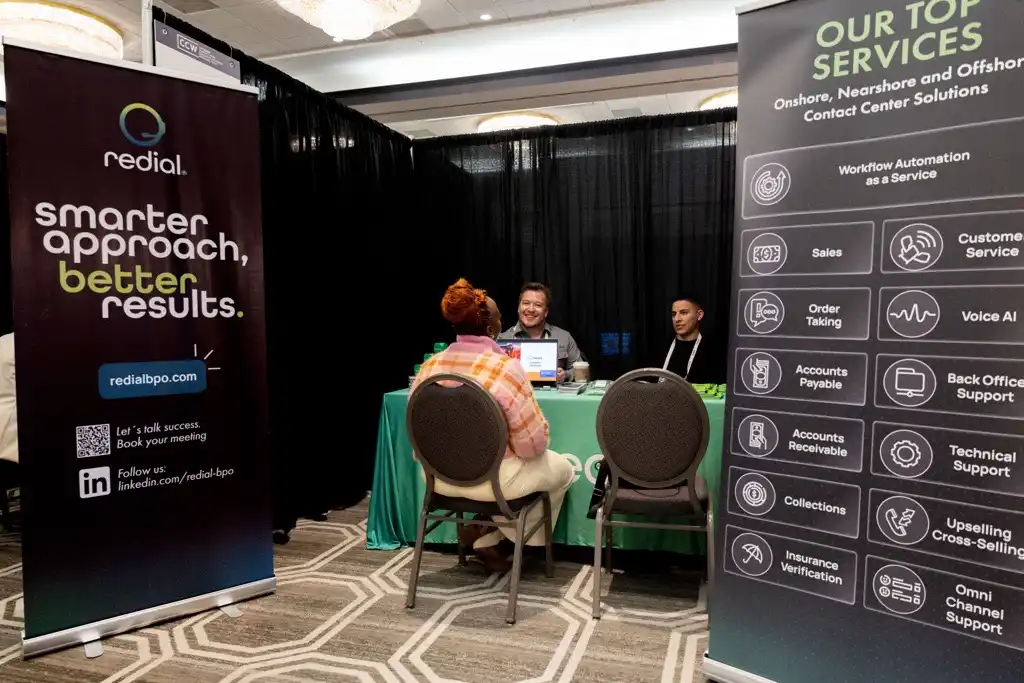
I’m the VP of Client Services at Redial BPO. I’m passionate about CX, building strong client relationships, and blending tech with human talent to deliver top-tier service across industries.