


Outsourcing to South Africa: What’s Driving Growth
Outsourcing to South Africa has become one of the fastest-growing decisions US and UK companies make when placing customer service, back-office, or support work offshore. Interest in the country as a delivery location has climbed steadily over the past several years. Government backing, a deep English-speaking talent pool, and costs that undercut in-house hiring in developed markets are the main reasons why.
- Why Companies Are Outsourcing to South Africa?
- A Strategic Gateway to the African Market
- Government Support: The GBS Incentive Programme
- Outsourcing to South Africa: Deep Industry Expertise and a Skilled Workforce
- What Clients Are Saying About Redial BPO’s Outsourcing Services
- Frequently Asked Questions About Outsourcing to South Africa

Why Companies Are Outsourcing to South Africa?
Outsourcing to South Africa isn’t a new trend, but it has accelerated in recent years. The appeal comes down to a handful of consistent, well-documented factors:
- Cost savings. South African providers typically deliver 55 to 70 percent in cost savings compared to hiring in-house in the US, UK, or Australia.
- English proficiency. English is the dominant business language, and the accent is widely considered neutral and easy for Western customers to understand, which shortens training time for voice-based roles.
- Time zone alignment. South Africa’s time zone overlaps closely with the UK and continental Europe, making it a natural fit for companies serving those markets around the clock. That’s part of why Redial pairs South Africa with a follow-the-sun coverage model alongside its Tijuana operation, using South Africa to extend coverage into hours a nearshore Mexico team can’t reach as efficiently.
- A large, growing labor pool. With a population of more than 55 million, South Africa offers a depth of available talent that many smaller offshore markets simply can’t match, which matters most for companies that need to scale a support team quickly.
- Impact sourcing. A meaningful share of the industry’s hiring comes from historically disadvantaged communities, giving the cost case a workforce-development dimension that not every destination can offer.
These factors are why cities like Johannesburg have become a top destination for companies outsourcing to South Africa. None of them is new on its own, but together they’ve compounded into measurable, sustained market growth.
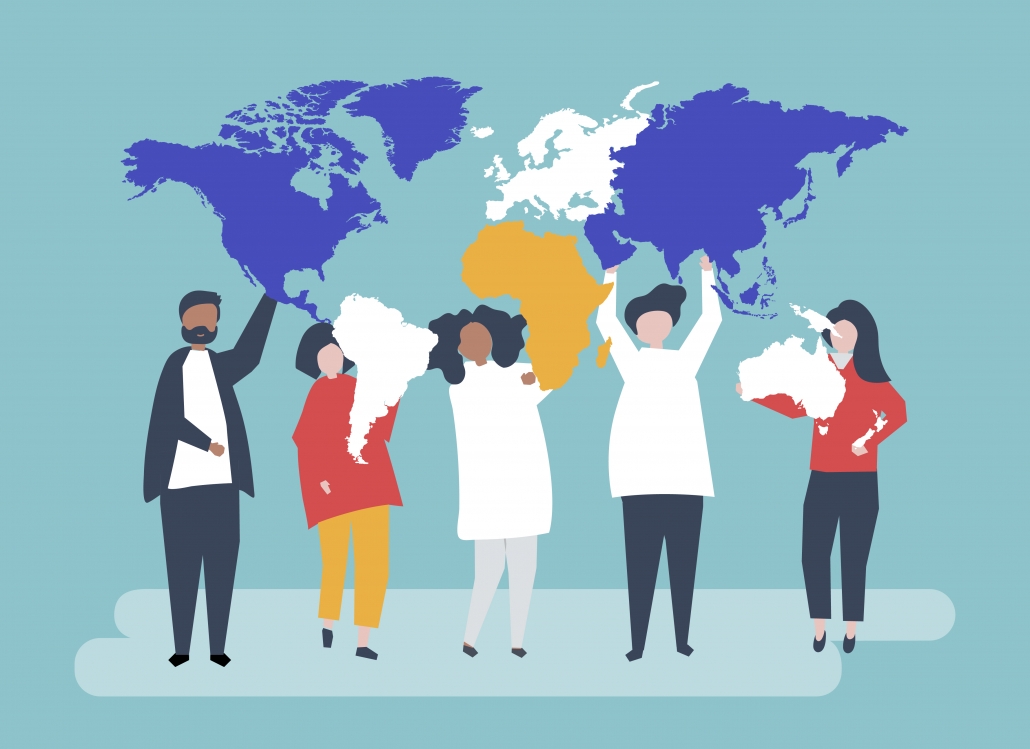
A Strategic Gateway to the African Market
Beyond the direct cost and talent case, South Africa offers something most single-country outsourcing destinations don’t: proximity to the rest of Sub-Saharan Africa. As the most advanced and broad-based economy on the continent, the country gives companies preferential access to regional trade blocs and a business environment that US investors generally find transparent and well-regulated.
For a company outsourcing to South Africa primarily to serve US or European customers, that regional access is a secondary benefit rather than the main draw. But for companies with any interest in expanding into African markets down the line, it’s a meaningful reason to choose South Africa over a destination with a narrower geographic footprint.
The country’s dynamic, market-oriented business community has also made it an established destination for telecommunications, banking, financial services, insurance, and retail companies beyond the core BPO sector, which reinforces the local talent and infrastructure base that outsourcing buyers ultimately rely on.

Government Support: The GBS Incentive Programme
South Africa’s growth as a BPO destination hasn’t happened by accident. The government, through the Department of Trade, Industry and Competition, runs the Global Business Services (GBS) Incentive, a cash grant designed to attract and grow offshore-facing employment, with a particular focus on hiring workers aged 18 to 34. The incentive has been in effect since January 2019.
This kind of public-private alignment, government incentives paired with an active industry association, is a big part of why the case for outsourcing to South Africa has kept strengthening even as global outsourcing spend has shifted around. It also explains why local recognitions, like Redial BPO’s own standing within South Africa’s BPO community, matter beyond the trophy case: they reflect an industry that’s organized and actively supported.
Outsourcing to South Africa: Deep Industry Expertise and a Skilled Workforce
South Africa’s contact center industry has more than two decades of operating history, and that maturity shows up in the range of sectors it now serves: legal support, healthcare, gaming, financial services, and general customer experience work, not just entry-level voice support.
For companies outsourcing to South Africa specifically for CX or support roles, the workforce itself is the other half of the equation. English is widely spoken and understood, accents are generally neutral and easy for Western customers to follow, and the country’s multicultural population also produces agents fluent in French, Italian, German, and other European languages. For a company with support needs across multiple European markets, not just the US and UK, that multilingual depth is a real differentiator, and it’s one reason some global brands route European-language support through South Africa even when their primary customer base is domestic to the US.

Outsourcing to South Africa: Infrastructure and Cost Efficiency
South Africa’s information and communication technology infrastructure is generally regarded as among the strongest in Africa, supported by continued government investment aimed at meeting global standards for contact center operations.
On cost, the pitch for outsourcing to South Africa isn’t cheaper at the expense of quality. It’s meaningfully cheaper with service levels that hold up, which is a different conversation for a founder or operations lead who has been burned by low-cost, low-quality outsourcing before. Combined with the government incentives described above, that cost efficiency compounds rather than standing alone.
How South Africa Compares to Other Outsourcing Destinations
South Africa isn’t the only offshore or nearshore option, and it shouldn’t be evaluated in isolation. Compared to the Philippines and India, two of the largest global BPO markets, South Africa is smaller in scale but competes well on time zone fit for European and UK clients and on the neutrality of its English accent. Compared to Mexico, South Africa serves a mostly different geography: Mexico’s advantage is proximity and real-time overlap with US business hours, while South Africa’s advantage is overlap with UK and European hours, delivered through the same kind of offshore delivery model.
That’s part of why companies increasingly treat outsourcing to South Africa and nearshoring to Mexico as complementary choices rather than competing ones. A US-based company with European customers, or a UK-based company that also needs weekend and after-hours US coverage, can use both to build a coverage model that neither location could deliver alone.
What to Look for When Choosing a South Africa-Based Partner
The country-level advantages above only translate into results if the specific provider is set up well. A few things worth checking during due diligence:
- Track record with your industry. A provider with existing financial services or healthcare clients will already understand compliance basics a generalist team would need to learn from scratch.
- Data security certifications. PCI DSS and HIPAA compliance matter if the work touches payment data or protected health information, and not every provider carries both.
- Actual multilingual bench strength, not just English. If European-language coverage is part of the plan, ask how deep that talent pool really is.
- How the provider handles scaling, since individual providers can still hit local hiring limits in a specific city even though the national labor pool is large.
- Whether they operate more than one delivery location. A provider that can blend South Africa with a nearshore option like Mexico gives a company more flexibility than one locked into a single geography.
Redial BPO’s Own Read on the Market
Redial BPO’s interest in South Africa isn’t theoretical. Site visits to Johannesburg and Durban, including meetings with local outsourcers and youth-employment programs, plus attendance at the country’s main BPO industry conference, reinforced what the data already shows: a large, English-proficient workforce, a supportive policy environment, and a business culture that’s easy for US and international companies to work with.
That understanding shapes how Redial BPO already operates from South Africa alongside its Tijuana-based delivery, using South Africa’s time zone advantage for Europe and off-hours coverage while Mexico continues to serve as the primary nearshore option for North American business hours. Together, they let Redial offer nearshore and offshore delivery depending on what a client’s coverage needs actually require, rather than defaulting to a single location for every account.
For companies weighing where to place their next outsourced team, South Africa deserves serious consideration: not as a replacement for nearshore options, but as a complementary delivery point with distinct advantages in cost, talent depth, and time zone reach.
Want to see if outsourcing to South Africa, or a blended delivery model, fits your team’s needs? Talk to our team or get a free quote to start the conversation.
What Clients Are Saying About Redial BPO’s Outsourcing Services
Hear what a Redial BPO client in the healthcare industry has to say about their experience in partnering with us. Take a look at the interview below:

Frequently Asked Questions About Outsourcing to South Africa
1. Is outsourcing to South Africa a good choice for customer service?
Yes. South Africa is consistently ranked among the top offshore CX delivery locations globally, largely due to its English-proficient talent pool and cultural affinity with Western markets.
2. What makes South Africa stand out for contact center services?
South Africa combines over two decades of contact center experience with a culturally diverse, multilingual workforce and solid infrastructure.
3. How much can a company save by outsourcing to South Africa?
Cost savings typically range from roughly 55 to 70 percent compared to in-house teams in the US, UK, or Australia, depending on the service line and staffing model.
4. Which industries commonly outsource to South Africa?
Telecommunications, banking, financial services, insurance, retail, and healthcare are among the leading sectors using South African BPO providers, alongside general customer service and back-office support.
5. Does the South African government support companies outsourcing to South Africa?
Yes. The dtic runs the Global Business Services (GBS) Incentive, a cash grant aimed at offshore-facing employment creation, particularly for youth talent.