

RedialBPO
  • Locations
    • Follow-The-Sun Model
    • Mexico
    • South Africa
    • Philippines
    • Costa Rica
  • Services
    • BPO Services
    • BPO Nearshore Services
    • BPO Offshore Services
    • Call Center Solutions
    • Contact Center Solutions
    • Core Services
      • Accounts Payable and Receivable
      • Back Office Support
      • Customer Service
      • Debt Collection
      • Insurance Verification
      • Order Taking Service
      • Sales Service Inbound and Outbound
      • Tech Support
      • Upselling and Cross-Selling
      • Voice AI Services
      • Workflow Automation Services
    • Additional Services
      • Appointment Setting
      • Data Processing
      • Email Request Services
      • Lead Generation
      • Live Chat Services
      • Transfer Service
  • Industries
    • Automotive Services
    • Financial Services
    • Healthcare Services
    • Hospitality and Travel Services
    • IT Services
    • Logistics Services
    • Retail Services
    • Telecom Services
    • Utility and Energy Services
  • Blog
  • Company
    • About Us
    • Our Team
    • Media
    • Ebooks
    • Contact Us
  • Join Redial!
  • Get a Free Quote
  • Menu Menu
Banner for a report: The State of Insurance Verification 2026; subtitle notes AI, staffing pressure, and denials; stethoscope on the left with Redial logo.
Elder Gonzalez

Prior Authorization Outsourcing: How Healthcare Practices Are Cutting Denials and Reclaiming Clinical Time

April 24, 2026/in CX and Services, Healthcare, Industries, Insurance Verification /by Elder Gonzalez
Redial BPO Insurance Verification Trend Report 2026 cover

Download the Insurance Verification Trend Report 2026

Full breakdown of denial data, AI adoption gaps, segment-by-segment analysis, and a 5-question self-assessment framework to help you evaluate where your practice stands today.

Get the Trend Report →

If you manage or lead a healthcare practice in 2026, prior authorization is almost certainly one of your biggest operational headaches. It consumes staff time, delays patient care, creates scheduling bottlenecks, and generates a steady stream of denials that your team then has to chase, rework, and appeal — often for revenue that never fully comes back.

The numbers confirm what most practice administrators already know from experience. According to the American Medical Association’s 2024 Prior Authorization Physician Survey, physicians and their staff spend an average of 13 hours per week on prior authorization tasks — the equivalent of more than one full business day, every week, for every provider in your practice. And a February 2026 KFF Health Tracking Poll found that prior authorization now ranks as the single biggest non-cost burden patients face when trying to access care — ahead of understanding their bill, finding in-network providers, and scheduling appointments.

The operational and financial pressure on practices is real, it’s growing, and for many organizations, internal resources alone are no longer sufficient to manage it. That’s why prior authorization outsourcing has emerged as one of the most strategically significant decisions a practice can make in the current environment.

What prior authorization outsourcing actually means

Prior authorization outsourcing means transferring your PA workflows — eligibility verification, authorization requests, status tracking, follow-up calls, and escalations — to a specialized third-party team that handles them on your behalf, on your timeline, and in alignment with your payer contracts and EHR system.

Done well, it is not simply a staffing arrangement. The best prior authorization BPO partners combine trained specialists with AI-augmented workflows that enable faster request submission, flag high-risk cases before submission, and automatically track approval status across payers — capabilities that most independent practices cannot build or maintain internally without a significant technology investment.

This is an important distinction. Outsourcing PA to a partner who still operates manually offers a limited advantage over in-house staff. The value comes from a partner who has already invested in the technology, the payer-specific expertise, and the operational infrastructure that makes prior authorization faster, more accurate, and less dependent on institutional knowledge that walks out the door when a specialist resigns.

Why the prior authorization problem is getting worse, not better

It would be reasonable to hope that industry-wide attention to the PA burden has started to ease the pressure. The data suggests the opposite.

According to the CAQH 2024 Index, the total medical spend tied to prior authorization administrative work reached $1.26 billion in 2024 — and 92% of medical group practices report having to hire or reassign staff solely to handle the growing volume of PA requests. Meanwhile, payers have responded to rising utilization by deploying AI to accelerate their own denial decisions, creating a structural asymmetry: payers are moving faster, while most practices are still processing PA requests manually.

The Redial BPO Insurance Verification Trend Report 2026 documents this gap in detail. Only 14% of providers are currently using AI to reduce denials, despite 67% believing AI can improve the process. The practices that do not close this gap are systematically losing ground to payers who have already automated their side of the transaction.

The prior authorization crisis is not a temporary disruption. It is a structural feature of U.S. healthcare administration that is unlikely to resolve on its own — and one that directly affects your denial rate, your Days in A/R, and the amount of time your clinical staff spends on administrative work instead of patient care.

What to look for in a prior authorization outsourcing partner

Not all outsourcing arrangements deliver the same results. When evaluating a prior authorization BPO partner, four criteria are worth examining carefully before signing anything.

Real-time payer interaction capability

Prior authorization is uniquely time-sensitive. Payer hotlines operate on U.S. business hours. Authorization portals have cutoff times. A team working a 10–12 hour time offset cannot handle same-day PA follow-up or urgent pre-service eligibility questions without structural delays. Nearshore delivery — from Mexico, Costa Rica, or South Africa — provides the U.S. time-zone alignment this function specifically requires.

AI-augmented workflows, already deployed

Ask any prospective partner how AI fits into their current operations — not their roadmap. Predictive denial flagging, automated status tracking, and NLP-based policy interpretation are available today. A partner who is still building these capabilities will promise outcomes they cannot yet deliver.

Bilingual capability for patient-facing verification

Spanish-speaking patients frequently encounter language barriers at the point of eligibility and benefit verification in medical billing. A bilingual verification team addresses billing disputes, higher no-show rates, and lower patient satisfaction scores simultaneously. This is a differentiator that most offshore competitors do not offer.

Demonstrated onboarding speed

For practices experiencing active revenue leakage from PA denials, implementation timelines matter. A partner who requires four to six months to reach full operational deployment is extending your problem, not solving it. Ask for documented case examples with specific timelines.

Our insurance verification and prior authorization outsourcing services are built specifically around these four criteria, with multishore delivery across Mexico, Costa Rica, South Africa, and the Philippines.

The case for acting now rather than later

There is a window here that will not stay open indefinitely. As prior authorization outsourcing becomes more mainstream, the competitive advantage of early adoption narrows. Practices that make this shift in 2026 will be processing cleaner claims, recovering more denied revenue, and operating with leaner front-office teams while their peers are still working through the decision.

The financial case is straightforward. If your denial rate is above 8%, your team is spending more than 90 minutes per day on PA-related calls, or you have had two or more verification specialist positions turn over in the past year, the cost of outsourcing is almost certainly lower than the cost of the status quo.

Frequently asked questions

What is prior authorization outsourcing?

Prior authorization outsourcing is the practice of transferring your PA workflows to a specialized third-party BPO provider. The goal is to reduce the administrative burden on your internal team, improve first-pass authorization rates, and prevent the denials that consume disproportionate staff time in rework and appeals.

How much does prior authorization cost healthcare practices internally?

The AMA reports that practices complete an average of 39 prior authorization requests per physician per week, consuming 13 hours of staff time. When you factor in loaded staff costs, clinical time diverted to PA tasks, and revenue lost to unrecovered denials, most practices find the fully-loaded cost of internal PA management is 3–4 times higher than their initial estimate.

Can outsourcing prior authorization actually reduce denial rates?

Yes — when the outsourcing partner has AI-augmented workflows and payer-specific expertise. The key mechanism is predictive denial detection: flagging high-risk claims before submission rather than appealing after the fact. 86–90% of claim denials are considered potentially avoidable (MGMA 2024), meaning the majority of your current denial volume is addressable through better front-end processes, not appeals.

How is prior authorization outsourcing different from hiring more billing staff?

Hiring staff transfers the recruitment risk, training cost, and turnover exposure to your organization. When a specialist leaves, your denial rate spikes and their institutional knowledge about payer-specific requirements leaves with them. Outsourcing transfers all of that continuity risk to the BPO partner, whose entire operation is built to absorb it.

How long does it take to implement a prior authorization outsourcing partnership?

Best-in-class partners can reach full operational deployment in 60–90 days. Redial BPO deployed a 112-agent team for Affordable Dentures & Implants and was fully operational within 90 days of engagement. When evaluating vendors, ask for specific client case examples rather than estimated timelines, and treat any partner who cannot provide them with appropriate skepticism.

Sources and references

  • American Medical Association’s 2024 Prior Authorization Physician Survey: https://www.ama-assn.org/system/files/prior-authorization-survey.pdf
  • KFF Health Tracking Poll: Prior Authorizations Rank as Public’s Biggest Burden When Getting Health Care: https://www.kff.org/public-opinion/kff-health-tracking-poll-prior-authorizations-rank-as-publics-biggest-burden-when-getting-health-care/
  • CAQH Index: https://www.caqh.org/insights/caqh-index-report

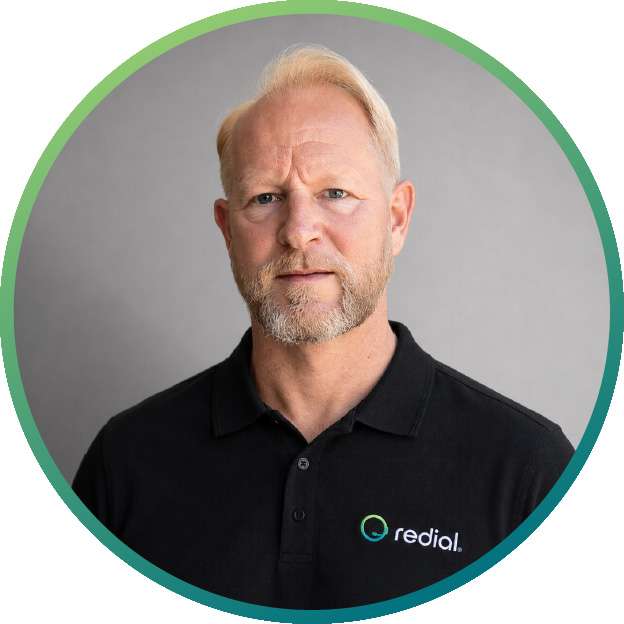
Elder Gonzalez - VP of Client Services
Elder Gonzalez

I’m the VP of Client Services at Redial BPO. I’m passionate about CX, building strong client relationships, and blending tech with human talent to deliver top-tier service across industries.

www.linkedin.com/in/eldergonzalez/
https://redialbpo.com/wp-content/uploads/2026/04/Campaign_Assets_Insurance-Verifications_Blog-1200-x-460.jpg 511 1333 Elder Gonzalez https://redialbpo.com/wp-content/uploads/2026/04/rbpo_logo_color_large_black_600x209-300x105.png Elder Gonzalez2026-04-24 11:17:012026-04-24 11:41:44Prior Authorization Outsourcing: How Healthcare Practices Are Cutting Denials and Reclaiming Clinical Time
Auto Finance Summit East 2026
Lincoln Graham

Redial BPO attending Auto Finance Summit East 2026

April 13, 2026/in Events /by Lincoln Graham

Auto Finance Summit East 2026 is shaping up to be one of the most focused and high-value events on the auto lending calendar — and Redial BPO will be there. This May 11–13 at the JW Marriott Nashville, the summit will bring together professionals across the full spectrum of auto lending and leasing to tackle some of the most pressing topics in the industry right now.

The agenda goes deep on dynamic risk assessment, the future of digital transformation, the industry’s macroeconomic outlook, subprime auto lending, and lender-dealer collaboration. These aren’t surface-level conversations — they’re the strategic discussions that shape how auto finance organizations operate, scale, and serve their customers. That’s exactly the context where what we do at Redial becomes relevant.

What’s Driving the Conversation in Auto Finance Right Now

One panel, “Leaning into the future of digital transformation,” will feature speakers from PenFed Credit Union and Chase Auto discussing how to tap into embedded finance and APIs to drive portfolio growth, mature the digital retail footprint with AI, and differentiate with speed, transparency, and personalization.

Another session will focus on dynamic risk assessment, covering how lenders can balance speed with compliance, incorporate real-time data to improve risk management, and automate stipulations validation while employing first-party fraud detection.

This is the direction auto finance is heading — smarter systems, faster decisioning, and tighter compliance requirements. And as lenders modernize their operations, the demand for reliable, scalable support in areas like collections, customer outreach, and back-office processing only increases.

Meet the Redial BPO Team

Representing Redial BPO will be Jason Heil, CEO, and Elder Gonzalez, VP of Client Services. Both will be on the floor throughout the three days, meeting with lenders, captives, credit unions, and fintech companies exploring smarter ways to scale their operations — whether that’s collections, customer service, loan processing support, or back-office workflows — across our teams in Mexico, Costa Rica, South Africa, and the Philippines.

If your organization is navigating growth, rising operational costs, or the challenge of maintaining quality at scale, that’s the conversation we’re there to have at booth #309.

Let’s Connect at Auto Finance Summit East

If you’re attending Auto Finance Summit 2026, reach out ahead of time to schedule a meeting. Spots fill quickly, and the most valuable conversations at events like this happen when they’re planned. Find us at RedialBPO.com, connect with Elder or Jason directly on LinkedIn or schedule a meeting by clicking here.

If you’re attending Auto Finance Summit 2026 and want to explore a partnership, I encourage you to reach out to our team. This is a conversation worth having.

FAQ: Redial BPO at Auto Finance Summit East 2026

1. What is Auto Finance Summit 2026?

Auto Finance Summit is a three-day experience for auto lending and leasing professionals that draws attendees from across the lending spectrum — including executives from prime and nonprime banks, credit unions, floor-plan lenders, thrifts, dealerships, and service providers. The 2026 edition takes place May 11–13 at the JW Marriott Nashville.

2. Why is Redial BPO attending Auto Finance Summit East 2026?

Auto finance and financial services are a core part of who we serve. The lenders, captives, and fintechs attending this summit are exactly the organizations we partner with to scale collections, customer support, and back-office operations. This is where those conversations happen at the highest level.

3. How do I schedule a meeting with your team at the summit?

Contact us in advance through RedialBPO.com, reach out to Elder Gonzalez or Jason Heil directly on LinkedIn, or directly schedule a meeting by clicking here.

4. What services does Redial BPO offer to auto finance companies?

We provide nearshore and offshore BPO services, including debt collection, inbound and outbound customer support, back-office processing, and accounts receivable management. Our delivery teams are based in Mexico, Costa Rica, South Africa, and the Philippines, serving financial services organizations across North America.


At Redial BPO, we believe AI works best when it amplifies human expertise, not replaces it. This article was developed by Lincoln Graham, Director of Marketing, with the help of AI to organize and draft the written content. The experience, data, and perspective are entirely his.


https://redialbpo.com/wp-content/uploads/2026/04/hdr_blog_autofinance.jpg 307 800 Lincoln Graham https://redialbpo.com/wp-content/uploads/2026/04/rbpo_logo_color_large_black_600x209-300x105.png Lincoln Graham2026-04-13 13:02:252026-04-13 13:02:26Redial BPO attending Auto Finance Summit East 2026

Search our CX Blog

Recent Posts

  • Banner for a report: The State of Insurance Verification 2026; subtitle notes AI, staffing pressure, and denials; stethoscope on the left with Redial logo.Prior Authorization Outsourcing: How Healthcare Practices Are Cutting Denials and Reclaiming Clinical TimeApril 24, 2026 - 11:17 am
  • Auto Finance Summit East 2026Redial BPO attending Auto Finance Summit East 2026April 13, 2026 - 1:02 pm
  • Redial BPO’s 9th AnniversaryCelebrating Redial BPO’s 9th Anniversary: Nine Years of Growth, People, and PurposeMarch 13, 2026 - 4:46 pm
  • Shoptalk Spring 2026Redial BPO attending ShopTalk Spring 2026March 4, 2026 - 1:50 pm
  • What AI is not is a replacement for human judgmentAI in the Contact Center: From Recruiting to ReadinessFebruary 27, 2026 - 10:51 am

Categories

  • Awards
  • BPO
  • CX and Services
  • Events
  • Healthcare
  • Industries
  • Insurance Verification
  • News
  • Redial Culture

PCI Logo Redial BPO

Resources

Services

Industries

Blog

Get a Quote

Services

Appointment Setting

Customer Service

Debt Collection

Email Services

Lead Generation

Live Chat

Tech Support

Transfer Services

About Us

Leadership

Contact Us

Privacy Policy

Terms of Use

Logo Redial

© 2026 Redial. All Rights Reserved.

Scroll to top
We use cookies on our website to give you the most relevant experience by remembering your preferences and repeat visits. By clicking “Accept”, you consent to the use of ALL the cookies.
.
You can also check our Cookie Policy.Accept
Manage consent

Privacy Overview

This website uses cookies to improve your experience while you navigate through the website. Out of these, the cookies that are categorized as necessary are stored on your browser as they are essential for the working of basic functionalities of the website. We also use third-party cookies that help us analyze and understand how you use this website. These cookies will be stored in your browser only with your consent. You also have the option to opt-out of these cookies. But opting out of some of these cookies may affect your browsing experience.
Necessary
Always Enabled
Necessary cookies are absolutely essential for the website to function properly. These cookies ensure basic functionalities and security features of the website, anonymously.
CookieDurationDescription
cookielawinfo-checkbox-analytics11 monthsThis cookie is set by GDPR Cookie Consent plugin. The cookie is used to store the user consent for the cookies in the category "Analytics".
cookielawinfo-checkbox-functional11 monthsThe cookie is set by GDPR cookie consent to record the user consent for the cookies in the category "Functional".
cookielawinfo-checkbox-others11 monthsThis cookie is set by GDPR Cookie Consent plugin. The cookie is used to store the user consent for the cookies in the category "Other.
cookielawinfo-checkbox-performance11 monthsThis cookie is set by GDPR Cookie Consent plugin. The cookie is used to store the user consent for the cookies in the category "Performance".
Functional
Functional cookies help to perform certain functionalities like sharing the content of the website on social media platforms, collect feedbacks, and other third-party features.
Performance
Performance cookies are used to understand and analyze the key performance indexes of the website which helps in delivering a better user experience for the visitors.
Analytics
Analytical cookies are used to understand how visitors interact with the website. These cookies help provide information on metrics the number of visitors, bounce rate, traffic source, etc.
Advertisement
Advertisement cookies are used to provide visitors with relevant ads and marketing campaigns. These cookies track visitors across websites and collect information to provide customized ads.
Others
Other uncategorized cookies are those that are being analyzed and have not been classified into a category as yet.
SAVE & ACCEPT