


How to Choose the Best Outsourcing Call Center Partner in Mexico
Most companies researching outsourcing call center to Mexico start by comparing hourly rates. That is the wrong first move. Rate tells you what a provider charges. It tells you nothing about whether your customers hang up satisfied, and that is the number that actually shows up in your revenue.
The case for outsourcing call center to Mexico is strong, and the reasons are covered below. But the country is not the decision. The partner is the decision. Two providers in the same Tijuana office park can deliver completely different outcomes. This guide covers why the move works, then gives you a seven-factor checklist for choosing who you actually sign with.
- Why Outsourcing Call Center to Mexico Works
- 7 Factors to Check Before Outsourcing Call Center to Mexico
- 1. Infrastructure: What the Operation Actually Runs On
- 2. Campaign and Industry Experience
- 3. Onboarding: The Clearest Early Signal You Will Get
- 4. Language and Cultural Fit
- 5. Support Staff and the Bench Behind Them
- 6. Does the Provider Actually Want to Be a Partner?
- 7. Service Fit: Does the Catalog Match Where You Are Going?
- The 7-Factor Scorecard for Outsourcing Call Center to Mexico
- Is Outsourcing Call Center to Mexico Right for Your Business?
- Let's Talk About Your Call Center Strategy
- Frequently Asked Questions About Outsourcing Call Center to Mexico
- 1. What are the benefits of outsourcing call center to Mexico?
- 2. What should I look for in an outsourcing call center partner in Mexico?
- 3. How do I start outsourcing call center to Mexico?
- 4. Is outsourcing call center to Mexico cheaper than the Philippines or India?
- 5. Should I outsource multiple processes to the same partner?
Why Outsourcing Call Center to Mexico Works
Three advantages do most of the work behind outsourcing call center to Mexico, and only one of them is cost.
- Time zone alignment. Agents in Mexico work your hours. An escalation raised at 2pm gets resolved at 3pm, not tomorrow morning. Offshore support buys you a lower rate and charges you a full business day for every correction.
- Cultural fluency. The US and Mexico share centuries of overlapping commerce, language, and culture. Agents in border cities carry the accents, idioms, and references your customers already recognize.
- Depth of talent. Mexico has a mature call center industry, which means a real pool of trained agents, supervisors, and QA staff rather than a building full of new hires.
This is part of why more US companies are relocating operations closer to home rather than defaulting to farther offshore destinations. The scale is not marginal: in an analysis based on trade data, the Inter-American Development Bank put the nearshoring opportunity across Latin America at roughly 78 billion dollars a year in additional exports, with about 14 billion of that in services rather than goods, and Mexico positioned to capture the largest single share.
If you are still weighing the country itself rather than the partner, how nearshore and offshore call centers compare is the better starting point. If Mexico is already decided, the rest of this article is the part that matters.
7 Factors to Check Before Outsourcing Call Center to Mexico
Get most of these right and the partnership quietly works. Get one badly wrong and no discount cover the cost of unwinding it.
1. Infrastructure: What the Operation Actually Runs On
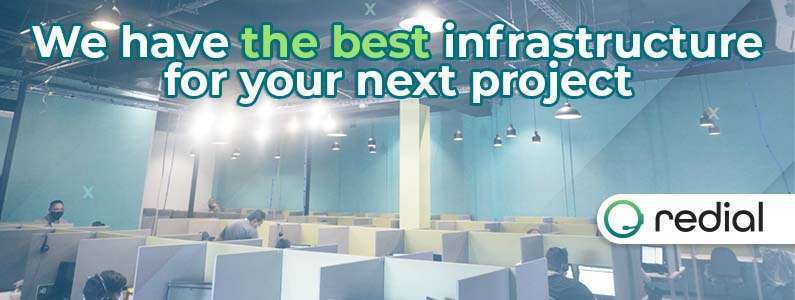
Infrastructure is where outsourcing call center to Mexico either scales or stalls. It splits into two layers, and a provider can be strong in one and thin in the other.
- Regional infrastructure is the city around the operation: power reliability, connectivity, transit for agents, and physical room to expand into.
- Business infrastructure is what the center itself runs on: workstations, redundant power and internet, physical and data security, and the software stack agents live in all day.
Mexico’s capacity here has kept up with demand. Mexico’s expanding industrial infrastructure is projected to reach 477 industrial parks across 28 states in 2026, with over 100 more under construction, which has made border and near-border cities steadily more viable for operations that need reliable facilities and room to grow into.
A provider with real infrastructure depth will not just absorb today’s volume, it will absorb next year’s without a visible dip in service. That is the difference between a partner you scale with and one you outgrow.
2. Campaign and Industry Experience
Experience is not one thing. Separate the layers before you evaluate it.
- Role experience: customer support, sales, technical support, billing, collections.
- Vertical experience: logistics, finance, ecommerce, healthcare. Each carries its own escalation patterns and seasonal rhythms.
- Org-wide experience, from frontline agents up through supervisors and QA.
- Process maturity. A provider who has run comparable campaigns already knows where your volume will spike and where quality usually slips.
The fastest way to test these costs nothing. A provider with real vertical depth asks sharper questions during the sales conversation than one reciting a generic capabilities pitch. Listen for who is interviewing whom.
3. Onboarding: The Clearest Early Signal You Will Get
How a provider runs onboarding tells you how they will run everything else. Providers with a tested methodology move faster because the staff, tools, and training material already exist before your contract is signed, rather than being assembled around your account after the fact.
- Experienced partners follow a proven, repeatable ramp-up process instead of improvising one per client.
- Staff and resources should be ready when terms are agreed, not recruited afterward.
- Good onboarding surfaces gaps early, while there is still time to fix them, instead of letting them harden into recurring complaints.
- Shared time zones mean a correction goes live the same day rather than costing a full cycle of back and forth.
That last point is where nearshore quietly earns its keep, and it is a large part of why Tijuana has become a nearshore hub for US companies.
4. Language and Cultural Fit
Teams that succeed at outsourcing call center to Mexico usually credit cultural fit before they credit cost. It is the factor buyers underestimate most, because it never appears on a rate card. It appears in the transcript.
Agents in border cities like Tijuana often carry the accents, idioms, and references a US customer already recognizes. That shortens the distance between an answer that is technically correct and one that sounds like it came from someone who actually understands the caller. Proximity buys logistics. It also buys cultural fluency, and the second one is far harder to train from scratch.
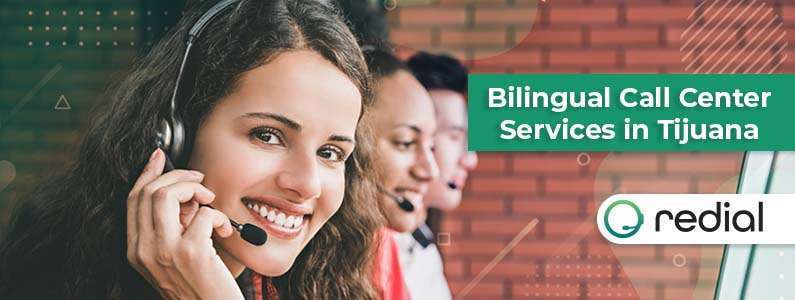
For businesses serving Spanish-speaking customers too, bilingual coverage stops being a nice-to-have and becomes the whole reason a Mexico-based partner outperforms a cheaper alternative eight time zones away. Redial builds its customer service programs on exactly this.
5. Support Staff and the Bench Behind Them
The people layer is easy to underweight, because it is invisible in a proposal deck. It should not be.
- A deep talent pool means faster staffing when a program has to scale on short notice.
- Training periods shorten when new hires already understand call center fundamentals before they ever touch your brand.
- Agents must be retrained continuously as your product, pricing, or policies change, not trained once at launch and left to drift.
- Quality holds from the first call to the thousandth only when there is a real bench behind the frontline. Turnover is inevitable in this industry. Depth is what absorbs it.
For multichannel or higher-volume programs, this is also where a provider’s contact center solutions capability matters, since running voice, chat, and email well requires supervisory structure, not just headcount.
6. Does the Provider Actually Want to Be a Partner?
Companies weighing outsourcing call center to Mexico almost never ask this question, and it is the one that separates a partner from a vendor. Capability can be verified on a site tour. Posture only reveals itself in how a provider engages before there is any contract to protect.
Watch for four things:
- Interest in your business, not just your volume. A provider with real industry experience understands what you do in the first conversation and does not need your category explained twice.
- Understanding of your culture and vision. A partner who knows your objectives, and how you want customers treated, makes better calls in the moments no script covers. Those moments are most of the job.
- A stake in how your brand looks. Those agents represent you, not them. A partner who treats that as their responsibility, rather than something for you to police, produces a measurably different quality of interaction.
- Flexibility and headroom. If your business doubles, the partner has to double with it without renegotiating the relationship from zero.
7. Service Fit: Does the Catalog Match Where You Are Going?
The last factor pays off in year two, not month one. Do not evaluate a provider only against what you need today.
- Confirm their current offerings cover your existing line of business. A mismatch here is a hard blocker, not a negotiation.
- Then look at everything else they run. If the same partner can take on processes you may want to move later, you avoid onboarding a second vendor, splitting your line of communication, and coordinating two contracts through every critical change.
- Vendor sprawl quietly eats the savings that motivated outsourcing in the first place. Consolidating with one capable partner protects them.
- Look for adjacent services worth testing, such as lead generation, which can open a market segment you are not currently reaching.
The 7-Factor Scorecard for Outsourcing Call Center to Mexico
Print this, fill in a column per provider, and the shortlist tends to sort itself out.
| Factor | What Good Looks Like | Question to Ask |
| Infrastructure | Redundant power and connectivity, secure facilities, room to expand | What is your uptime history and backup setup? |
| Experience | Proven track record inside your specific vertical | Walk me through a client in my industry |
| Onboarding | Documented, tested ramp-up with a clear timeline | How long until a new program is live? |
| Language and Culture | English fluency with US business context, bilingual where needed | How do you measure cultural fluency after launch? |
| Support Staff | Deep bench of agents, supervisors, and QA, with ongoing retraining | Agent-to-supervisor ratio? Average tenure? |
| Partnership Posture | Understands your business, flexible, invested in your brand | What do you already know about my industry? |
| Service Fit | Catalog covers today’s needs and next year’s expansion | What do clients like me add in year two? |
Is Outsourcing Call Center to Mexico Right for Your Business?
For most US companies handling meaningful support or sales volume, yes. But the honest answer depends on what you are optimizing for.
| If your priority is… | Mexico is… | Because |
| Same-day resolution and tight coordination | The strongest fit | Shared time zones remove the one-day lag that offshore support builds into every correction |
| Bilingual English and Spanish coverage | The strongest fit | Border-city talent pools are natively bilingual with US cultural context |
| The absolute lowest hourly rate | Not the cheapest option | Offshore rates are lower. The gap tends to reappear as turnover, escalations, and churn |
| A vendor you never speak to again | Probably overkill | Mexico earns its premium through proximity and collaboration. If you will not use them, you are paying for them anyway |
Redial BPO built its operation around call center services based in Mexico for the reasons above rather than in spite of them, and has watched the real value of nearshore call centers in Mexico play out across ecommerce, finance, and logistics accounts. Why companies choose Mexico covers the country-level case in more depth.
Let’s Talk About Your Call Center Strategy
The seven factors above are the right starting checklist, but no two businesses weigh them the same way. A high-volume ecommerce operation prioritizes elastic scale and seasonal flexibility. A financial services team prioritizes security posture and agent tenure. A healthcare practice cares about accuracy above all.
Contact us to talk through which of the seven actually matter for your operation, or get a free quote to see what outsourcing call center to Mexico looks like at your volume.

Frequently Asked Questions About Outsourcing Call Center to Mexico
1. What are the benefits of outsourcing call center to Mexico?
Three reasons: your agents work your hours, so escalations resolve the same day instead of the next one; border-city talent pools are natively bilingual and carry US cultural context; and Mexico has a mature call center industry with a deep bench of trained agents and supervisors. Cost matters, but it is rarely the deciding factor.
2. What should I look for in an outsourcing call center partner in Mexico?
Seven factors: infrastructure, industry experience, onboarding process, language and cultural fit, support staff depth, whether the provider behaves like a partner rather than a vendor, and whether their service catalog covers where your business is heading. A strong provider performs across all seven, not just the two that are easiest to demo.
3. How do I start outsourcing call center to Mexico?
Shortlist providers against the seven factors above, then run each one through the onboarding question. Experienced partners can bring a new program live within a few weeks, because the staff, infrastructure, and training process already exist before the contract is signed. Timelines stretch when a business needs heavy system integration or a highly custom setup.
4. Is outsourcing call center to Mexico cheaper than the Philippines or India?
Usually not on rate alone. Offshore hourly rates tend to be lower. The comparison changes when you count the cost of a full business day lost to every correction, higher escalation rates, and the customer churn that follows a support experience that feels distant. Mexico competes on total cost, not on sticker price.
5. Should I outsource multiple processes to the same partner?
Usually yes, if the partner is capable across them. One provider means one line of communication, one contract, and faster rollout when something changes. Splitting processes across vendors creates coordination overhead that quietly erodes the savings that motivated outsourcing in the first place.