RedialBPO
  • Services
    • Call Center Solutions
    • Contact Center Solutions
    • Core Services
      • Accounts Payable and Receivable
      • Back Office Support
      • Customer Service
      • Debt Collection
      • Insurance Verification
      • Order Taking Service
      • Sales Service Inbound and Outbound
      • Tech Support
      • Upselling and Cross-Selling
      • Voice AI Services
      • Workflow Automation Services
    • Additional Services
      • Appointment Setting
      • Data Processing
      • Email Request Services
      • Lead Generation
      • Live Chat Services
      • Transfer Service
    • BPO Services
    • BPO Nearshore Services
    • BPO Offshore Services
  • Industries
    • Automotive Services
    • Financial Services
    • Healthcare Services
    • Hospitality and Travel Services
    • IT Services
    • Logistics Services
    • Real Estate & Property Management
    • Retail Services
    • Telecom Services
    • Utility and Energy Services
  • Locations
    • Mexico
    • South Africa
    • Philippines
    • Follow-The-Sun Model
  • News & Events
    • Blog
    • Events
  • Company
    • About Us
    • Our Team
    • Media
    • Contact Us
  • Join Redial!
  • Get a Free Quote
  • Menu Menu
Fintech customer service outsourcing
Yessica Peña

Fintech customer service outsourcing in 2026

August 26, 2026/in CX and Services /by Yessica Peña

A blocked card, a stalled transfer, or a failed identity check is never a routine support ticket for a fintech. It touches someone’s money directly, which means the margin for error is thinner than in a typical SaaS or ecommerce help desk, and the compliance stakes are higher even when the interface is a slick app instead of a bank branch.

Fintech customer service outsourcing has to account for that difference from the first design decision, not retrofit it in once the ticket volume outgrows the founding team. The companies that get this wrong tend to make the same mistake in one of two directions: they either treat support as a cost center to minimize until a scandal forces a rebuild, or they over-hire generalist agents who can answer a question but can’t tell when a routine-looking ticket is actually a fraud case.

Fintech support looks different, but the stakes aren’t lower

It’s tempting to assume that a company built on automation needs less human support than a traditional financial institution, and the data says the opposite. PwC’s 2025 Customer Experience Survey found that 86% of consumers say human interaction is moderately or very important to their brand experience, even as AI adoption accelerates across nearly every industry — and financial products are exactly where that preference hardens, because the thing going wrong is somebody’s money, not a delayed package.

The same survey found that 52% of consumers stopped using or buying from a brand after a bad experience with its products or services. For a fintech competing on trust as much as on features, one badly handled dispute or one confusing KYC rejection can undo months of product-led growth.

A support interaction that goes well is invisible. One that goes badly becomes the reason a user closes the account and tells three people why.

This is where the fintech-versus-traditional-bank comparison actually breaks down. A traditional bank’s customer has usually chosen it for stability and has a branch, a relationship banker, or decades of brand trust to fall back on when something goes wrong. A fintech user chose the product for speed and convenience, which means the brand has less patience in reserve the moment that convenience breaks down — a slow or confusing resolution doesn’t just cost a ticket, it costs the entire premise the user signed up for.

What a fintech-specific support team actually handles

The work itself is different from general customer service in ways that matter for how a program gets staffed and trained. Agents need to verify an account, resolve a failed transfer, or walk a user through a disputed charge — each of those falling inside financial services support rather than the generic troubleshooting a typical help desk handles, and each one carrying a regulatory paper trail the agent has to get right the first time, not fix on a follow-up call.

The lending side of fintech adds its own layer. Fintech lenders managing charged-off accounts and collections are running a workflow that overlaps with support but isn’t the same job — a support agent resolving a failed payment and a collections agent working a delinquent balance need different training, different scripts, and often different compliance sign-off, even when they’re serving the same underlying customer base.

AI is already part of how this work gets done, but not in the way headlines about “AI customer service” suggest. AI-assisted verification and fraud-flagging built directly into the call lets an agent confirm an identity or catch a suspicious pattern in seconds rather than escalating and making the customer wait — the AI does the pattern-matching, a trained person still makes the judgment call on anything ambiguous.

What to build before scaling support

Compliance pressure in this space is rising, not leveling off. The CFPB’s own 2025 Consumer Response Annual Report shows complaints about money transfer and virtual currency products rose 275% over the prior year — the fastest-growing complaint category in the report, and one made up almost entirely of the exact products fintechs build. A support program that isn’t built to document and escalate correctly from day one is building compliance debt into every ticket it closes.

That’s the case for the team answering the phone, chat and email when something goes wrong with someone’s money being staffed and trained as a fintech-specific function from the start, not a generic queue that happens to handle financial tickets. Getting that structure right early avoids the more expensive version of the same fix: rebuilding the program after a compliance review flags gaps that should have been caught at hire.

Three questions are worth asking before a fintech signs with any support partner, generalist or specialist:

  • Does the partner already train agents on KYC and identity-verification workflows, or will that training happen for the first time on the account.
  • How does the partner document and escalate anything that looks like fraud, and on what timeline.
  • Does the partner’s reporting distinguish between a ticket that’s closed and a ticket that’s actually compliant, since those aren’t always the same thing.

A partner that can’t answer all three in specifics, not generalities, is not yet built for this category.

The takeaway

Once a program is live, the specific metrics worth tracking look different for fintech too — first-contact resolution on a disputed charge matters more than average handle time, and the gap between “ticket closed” and “compliance-documented” is worth watching as closely as CSAT.

Fintech customer service outsourcing done well doesn’t look like a generic support queue with a financial-services label on it. It looks like a team built from the start to handle the specific mix of speed, empathy and documentation this category actually requires — and the fintechs getting it right are the ones who built for that mix before they had to, rather than discovering the gap during a regulatory exam or a viral complaint thread.

Talk to a specialist

Support built for fintech, not retrofitted for it

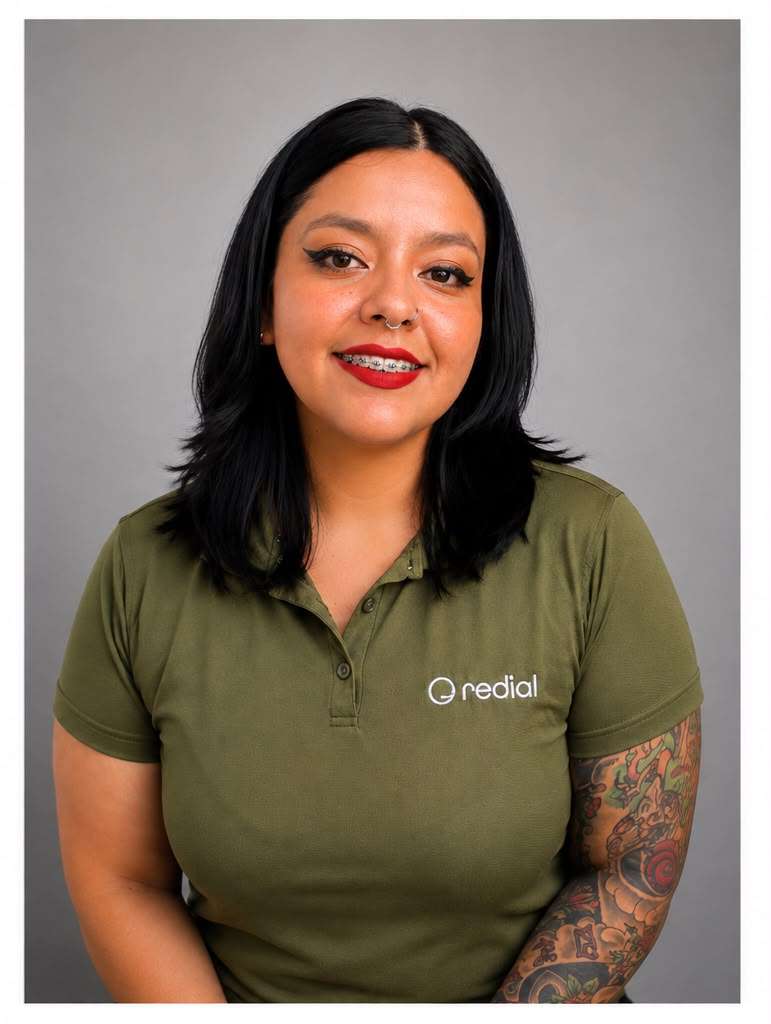
Yessica Peña, Client Services Executive at Redial BPO

Yessica Peña

Client Services Executive · Financial Services & Lending

Redial’s fintech-facing teams handle KYC and identity verification, fraud and dispute handling, and account servicing — trained on the compliance paper trail from day one, not after an exam flags a gap.

Book time with Yessica → See how it works

FAQ: Outsourced Customer Service for Fintech in 2026

1. What makes fintech customer service outsourcing different from general customer service outsourcing?

The individual tickets carry regulatory weight that general customer service doesn’t — identity verification, fraud flagging, and dispute handling all leave a compliance paper trail that has to be accurate the first time. A generalist support vendor without that training will handle the conversation but may not handle the documentation correctly.

2. Do fintech customers actually want human support, or just fast automated answers?

Both, depending on the situation. PwC’s 2025 Customer Experience Survey found that 86% of consumers still rate human interaction as moderately or very important to their brand experience, even as AI handles more routine interactions — the preference for a human doesn’t disappear, it shifts toward the moments that actually go wrong.

3. How does regulatory scrutiny affect fintech customer support specifically?

The CFPB’s 2025 Consumer Response Annual Report shows complaints about money transfer and virtual currency products — core fintech categories — rose 275% over the prior year, the fastest-growing complaint category in the report. That volume increase raises the stakes on getting documentation and escalation right in every support interaction, not just the ones that clearly involve fraud.

4. Is AI replacing human agents in fintech customer support?

Not in the interactions that matter most. AI is increasingly used for identity verification and fraud-pattern detection inside the call itself, speeding up routine confirmation, but the judgment call on anything ambiguous — a disputed charge, an unusual account request — still goes to a trained person.

5. What should a fintech ask before choosing an outsourced support partner?

Three things worth asking directly: whether agents are already trained on KYC and identity-verification workflows, how the partner documents and escalates anything resembling fraud, and whether the partner’s reporting distinguishes a closed ticket from a compliant one. Vague answers to any of the three are a signal the partner hasn’t built for this category specifically.

https://redialbpo.com/wp-content/uploads/2026/08/Blog-OCSF_Blog-1200-x-460.webp 461 1201 Yessica Peña https://redialbpo.com/wp-content/uploads/2026/04/rbpo_logo_color_large_black_600x209-300x105.png Yessica Peña2026-08-26 09:18:312026-08-28 07:58:53Fintech customer service outsourcing in 2026
Cold calling is dead?
Mary Pacheco

Cold Calling Is Dead? What’s Actually Working in B2B Sales Pipelines in 2026

August 19, 2026/in Call Center /by Mary Pacheco

Every quarter someone on the team asks whether cold calling is worth keeping in the mix at all, and every quarter the answer gets treated as a yes-or-no question. It isn’t one. The data on B2B cold calling strategy in 2026 says something more specific: calling alone is dying, and calling as one coordinated piece of a sequence is doing more than it ever has.

Confusing the two leads to the wrong decision either way — killing a channel that still works, or running it the same isolated way it was run five years ago and wondering why it stopped, then blaming the phone instead of the process wrapped around it.

Getting this wrong is expensive in both directions: cut calling entirely and a pipeline that depended on it goes quiet for a quarter before anyone notices why; keep running it the old way and the same reps burn the same hours dialing a list nobody re-qualified, chasing a connect rate that was never going to recover on its own.

Is cold calling actually dead?

No. RAIN Group’s Center for Sales Research surveyed 488 B2B buyers and 489 sellers across 25 industries and found that 82% of buyers accept meetings at least occasionally with sellers who reach out to them cold — a number that has not collapsed the way the “cold calling is dead” narrative implies.

Buyers are not refusing the channel. They are refusing the version of it that shows up as a single, unprepared, unfollowed-up call with nothing behind it.

That distinction matters more than the headline stat. A call that arrives with no context, no prior touch, and no plan for what happens if it goes to voicemail is a different product than a call that arrives as the third touch in a sequence a prospect has already half-recognized.

The gap between those two experiences is entirely within a program’s control, which is the part of this conversation that tends to get skipped in favor of debating the channel itself. Buyers aren’t rejecting the phone. They’re rejecting being treated as a cold list instead of a person worth a coordinated approach.

Part of what makes the “cold calling is dead” narrative so sticky is that it’s measuring the wrong thing. A raw connect rate in the low single digits looks damning in isolation, but it was never the number that mattered on its own — it’s one input into a funnel that also includes list quality, timing, and what happens after the connect.

A team that improves list quality and follow-up discipline without touching the script at all will often see the same “dead” channel start producing again, which suggests the diagnosis was wrong from the start.

What’s actually working: sequencing, not single-channel blasting

The teams still getting results from calling are not the ones dialing harder. They’re the ones who stopped treating the call as a standalone tactic. According to HubSpot’s most recent State of Cold Calling data, 73% of cold callers now combine email with their calling cadence rather than running either channel in isolation — multichannel sequencing has become the default, not the exception, among reps who are still hitting numbers.

That’s the operational shift a partner running outbound needs to be built around: a team running the calls, emails and follow-up as one coordinated sequence, not three disconnected activities reported separately and coordinated by nobody.

The gap between a program that calls and a program that sequences shows up directly in results, and it’s rarely visible from the outside until the numbers are already in.

The same shift shows up in how teams are using AI without replacing the human conversation. Scaling a program with AI support while keeping the actual conversation human is the same design principle whether the team is handling inbound service calls or outbound prospecting — AI does the preparation and the follow-up logistics; a person still has the conversation that gets a buyer to say yes.

Building the pipeline system, not just the call list

A call center is not a pipeline system, and the distinction is where most in-house outbound efforts quietly fail. Before the first dial happens, someone has to identify the right accounts, find the right contact at each one, and confirm that contact still holds the role and the company still fits the target profile — building and qualifying the list itself is a distinct discipline from making the calls, and a program that treats the two as the same job usually does both of them badly. A list built by whoever has spare time between calls is rarely the list a sequence deserves.

The downstream step matters just as much. A connected call that doesn’t convert into a scheduled, confirmed meeting on the buyer’s calendar is a wasted connect, and the handoff between “we got them on the phone” and “there’s a meeting booked” is where a surprising share of otherwise-good outbound programs lose the deal before sales ever sees it. Treating list-building, calling and appointment-setting as three separate jobs owned by three separate teams is usually where that handoff breaks down.

AI adoption inside the call itself is no longer a fringe tactic either. HubSpot’s data shows 23% of daily cold callers use AI tools extensively to prepare for calls, with another 49% using them occasionally — meaning roughly seven in ten reps who are still calling are already using some form of AI-assisted call preparation and scripting to get there, not doing it cold in the literal sense. A partner without that capability is running the version of cold calling buyers are actually tired of.

The takeaway

Cold calling isn’t dead. The version of it that ran alone, with no sequencing, no AI-assisted prep and no dedicated appointment-setting handoff, is the version that’s dying — and it was never the version that worked best in the first place.

The teams still filling pipeline from outbound in 2026 aren’t the ones who dialed the hardest. They’re the ones who rebuilt the process around what the data actually says buyers respond to, and stopped treating the phone as the whole strategy instead of one piece of it.

Talk to a specialist

Outbound built as a sequence, not a call list

Mary Pacheco, Client Services Manager at Redial BPO

Mary Pacheco

Client Services Manager · Outbound Sales

Redial’s outbound teams run calls, email and appointment setting as one coordinated sequence — ask what that looks like for your pipeline.

Book time with Mary → See how it works

FAQ: Cold Calling Is Dead?

1. Is cold calling still effective for B2B sales in 2026?

Yes, though its role has shifted. Research from RAIN Group’s Center for Sales Research found that 82% of B2B buyers accept meetings at least occasionally with sellers who reach out cold, and HubSpot’s data shows most active cold callers now run it as one channel within a multichannel sequence rather than as a standalone tactic.

2. What’s the difference between cold calling and a B2B cold calling strategy?

Cold calling is a single tactic — one channel, one touch. A strategy coordinates calling with email, timing, and a clear next step (typically an appointment-setting handoff) so that a connected call has somewhere specific to go instead of ending in a one-off conversation with no follow-up plan.

3. How is AI actually being used in cold calling right now?

Primarily for preparation, not for replacing the conversation. HubSpot’s data shows 23% of daily cold callers use AI tools extensively and another 49% use them occasionally — mostly for call prep, research, and follow-up logistics, while the live conversation with the buyer stays human.

4. What should a B2B company look for in an outbound sales partner?

A partner that treats calling, email and appointment setting as one coordinated sequence rather than three separately managed activities, since the handoff between “connected” and “meeting booked” is where many otherwise-solid outbound programs lose the deal.

https://redialbpo.com/wp-content/uploads/2026/08/Blog-CCD_Blog-1200-x-460.webp 461 1201 Mary Pacheco https://redialbpo.com/wp-content/uploads/2026/04/rbpo_logo_color_large_black_600x209-300x105.png Mary Pacheco2026-08-19 15:08:302026-08-20 09:23:33Cold Calling Is Dead? What’s Actually Working in B2B Sales Pipelines in 2026
How to Choose Nearshore Financial Customer Service
Yessica Peña

How to Choose Nearshore Financial Customer Service

August 13, 2026/in Business Process Outsourcing /by Yessica Peña

Most nearshore RFPs still get scored the same way: whichever vendor quotes the lowest hourly rate wins the shortlist. For a financial services contact center, that scoring method misses the variable that actually determines whether the program works — coverage that matches when your customers call, not when the vendor’s office happens to be open.

A nearshore financial customer service program that saves 20% on labor and misses half the after-work call volume has not saved anything. It has moved the cost somewhere the P&L does not show it. The framework below is the one we use internally before recommending any vendor comparison to a client, and it starts by separating what a quote actually prices from what a program actually costs.

The tradeoff most RFPs get backwards

Two things get treated as separate line items in a typical vendor comparison — hourly rate and hours of coverage — when they are really the same decision made twice. A center that only covers 9-to-5 Eastern time forces a bank or lender to either staff the evening and weekend gap internally, at domestic wages, or accept that a meaningful share of billing disputes and fraud alerts sit unanswered until the next business day.

Neither option shows up in the per-hour quote, and both erase the savings the quote implied. The gap is easy to miss in a spreadsheet comparison and expensive to discover after the contract is signed.

Time zone overlap with Latin America solves this in a way offshore locations structurally cannot: agents in Mexico, Colombia or Costa Rica work the same business day as a customer in Chicago or Dallas, which means round-the-clock coverage without a fully domestic headcount becomes a realistic staffing plan rather than an aspiration.

A vendor operating three or four hours behind the customer base it serves is, in practice, running a shortened business day dressed up as full coverage.

The second variable that gets underweighted is language. Nearly 45 million people in the United States speak Spanish at home, according to the Census Bureau’s 2024 American Community Survey — a population no financial institution operating nationally can treat as a rounding error, and one that a nearshore team with genuinely bilingual agents serves without a scripted-translation workaround.

A script translated on the fly is not the same capability as an agent who can handle a dispute conversation natively, and the difference shows up first in resolution time and second in complaint volume.

What actually drives the total cost of a nearshore program

The instinct to shop on hourly rate assumes cost is the whole story, and the data on why companies outsource at all no longer supports that assumption. Deloitte’s most recent Global Outsourcing Survey found that skilled talent and agility have joined cost reduction as primary drivers of outsourcing decisions — cost alone is no longer sufficient to explain why organizations choose one partner over another, and financial services buyers in particular are weighing a partner’s ability to actually run the work, not just staff it cheaply.

That shows up directly in what a financial services program needs day to day: account servicing, billing inquiries, payment arrangements and fraud or dispute handling are not interchangeable skill sets, and a proposal that prices them as if they were is a proposal built on the wrong assumption. Fraud and dispute handling in particular carries a training and escalation-path requirement that a generalist customer service vendor without financial-sector experience will underprice in the proposal and underdeliver in production.

The lowest bid on a financial services RFP is frequently the bid that has not priced in the specialization the work actually requires, and the gap only becomes visible once the program is live and the first escalated fraud call goes to the wrong queue.

Nearshore Financial Customer Service

What to vet before you sign

Coverage and specialization are visible in a proposal. Compliance readiness is not, and it is the item most likely to surface as a problem after the contract is signed rather than before. The federal rule governing how a vendor is required to handle a customer’s financial data — the FTC’s Safeguards Rule under the Gramm-Leach-Bliley Act — puts the obligation on the financial institution to select and retain service providers capable of maintaining appropriate safeguards, and to require those safeguards by contract.

That responsibility does not transfer to the vendor. It stays with the institution regardless of who is answering the phone, which makes vendor vetting a compliance exercise as much as a procurement one.

Three questions belong in every vendor evaluation before a contract is signed: can the vendor produce evidence of a written information security program, not just a claim of compliance; does the vendor’s escalation path for a fraud or dispute call match the institution’s own risk tolerance, not a generic script; and does the vendor’s time zone and language coverage match the customer base being served, not the vendor’s own headcount map.

A partner capable of answering all three is doing more than the narrower band of processes a nearshore vendor without financial-sector depth typically runs — and the reasoning behind that gap, and why banks build dedicated call center infrastructure around it in the first place, is worth understanding before the RFP goes out.

The takeaway

The lowest quote on a nearshore financial customer service RFP is rarely the lowest total cost once coverage gaps, specialization shortfalls and compliance exposure are priced in. A partner evaluated on those three variables together, not on rate alone, is the one that actually protects the number on the business case.

Talk to a specialist

Financial services support, compliance built in

Yessica Peña, Client Services Executive at Redial BPO

Yessica Peña

Client Services Executive · Financial Services & Lending

Redial’s financial services teams handle account servicing, payment processing and arrangements, and fraud and dispute handling — staffed to match your customers’ time zone, not ours.

Book time with Yessica → See how it works

FAQ: How to Choose Nearshore Financial Customer Service

1. What makes financial customer service outsourcing different from general customer service outsourcing?

Financial customer service work carries regulatory obligations a general customer service program does not — most directly the FTC’s Safeguards Rule under the Gramm-Leach-Bliley Act, which requires the financial institution to vet and contractually bind any vendor handling customer financial data. It also requires fraud and dispute-handling training a generalist vendor is unlikely to have built out.

2. Is nearshore or offshore better for financial services customer service?

Nearshore locations in Latin America offer same-business-day time zone overlap with US customers, which offshore locations in Asia generally cannot match without running overnight shifts. For financial services specifically, that overlap matters more than in other verticals because fraud alerts and billing disputes are time-sensitive in a way a next-business-day response does not resolve well.

3. What should a financial institution ask a nearshore vendor before signing a contract?

Three questions matter most: whether the vendor can produce evidence of a written information security program, whether its escalation path for fraud and dispute calls matches the institution’s own risk tolerance, and whether its time zone and language coverage matches the customer base being served. A quote that does not address these has not priced the actual work.

4. How many bilingual agents does a financial services program actually need?

There is no fixed ratio, and it depends heavily on the geographic footprint of the institution’s customer base.

5. Who is responsible for data security if a nearshore vendor is handling customer information?

Under the FTC’s Safeguards Rule, the financial institution retains responsibility for ensuring its vendors maintain appropriate safeguards, even though the vendor is the one handling the day-to-day work. That responsibility is established by contract, not assumed by outsourcing the function

https://redialbpo.com/wp-content/uploads/2026/08/BlogCover-NearshoreFinancial.webp 460 1200 Yessica Peña https://redialbpo.com/wp-content/uploads/2026/04/rbpo_logo_color_large_black_600x209-300x105.png Yessica Peña2026-08-13 11:15:072026-08-13 15:17:38How to Choose Nearshore Financial Customer Service
Eligibility verification denials
Dyamond Dickenson

Why Claim Denials Spike When Eligibility Checks Happen Too Late

August 7, 2026/in Insurance Verification /by Dyamond Dickenson

A claim gets denied three weeks after the patient already went home. The billing team pulls the file, and the reason is rarely a coding error — it’s that the patient’s coverage had lapsed, or the plan didn’t cover the service, and nobody confirmed that before the visit happened.

Eligibility verification denials get filed under “billing problem” in most practices’ internal tracking. They are, almost always, a timing problem instead. The check ran too early, too late, or only once, and by the time the claim reaches the payer, the coverage picture it was built on has already changed. The fix isn’t a better billing team. It’s a different point in the calendar.

Show Table of Contents
Hide Table of Contents
  • Where the delay actually comes from
  • What changes when verification moves upstream
  • What to look for in a verification workflow
  • The takeaway
  • FAQ: Eligibility Verification Denials: Why Timing Matters.

Where the delay actually comes from

Most practices run eligibility verification as a same-day or day-before task — sometimes at check-in, sometimes not until the claim is already queued for submission. Both are late. The window that actually prevents a denial closes well before the patient sits in the waiting room, which is why moving verification checks closer to the visit changes the outcome more than any downstream fix can.

A denial caught at submission is already a rework project — someone has to call the payer, pull the original authorization, and resubmit, often weeks after the visit that triggered it. A denial prevented at scheduling never becomes a project at all.

Three points in the scheduling-to-visit window routinely get skipped:

  • At scheduling — coverage confirmed once, weeks before the appointment, and never rechecked
  • Between scheduling and the visit — the point where a plan change, a lapsed policy, or a switched employer most often goes unnoticed
  • At check-in — the last point where a same-day correction is still possible, and the one most practices treat as the first check rather than the last one

Skipping the middle step is the single most common gap, and the national numbers show what that gap costs. Half of providers now name missing or inaccurate intake data as the leading cause of denials, up from the year before, and hospitals and health systems spent an estimated $25.7 billion in 2023 contesting claims that insurers initially denied — of which nearly $18 billion was later judged unnecessary once roughly 70% of those denials were overturned and paid anyway. That’s not a story about claims that shouldn’t have been paid. It’s a story about claims that should have been caught before submission, when the correction is a phone call instead of a three-round appeal.

This is a different failure point from the separate workflow that governs pre-treatment approval. Prior authorization catches whether a service needs pre-approval; eligibility verification catches whether coverage exists at all. Confusing the two, or assuming one covers the other, is its own source of denials — a practice can have a flawless prior authorization process and still lose the claim because nobody rechecked whether the plan was still active.

What changes when verification moves upstream

The industry’s own benchmark on administrative automation — CAQH’s 2025 Index, covering 2024 activity across more than 600 provider organizations and health plans representing 63% of insured lives — found that U.S. healthcare avoided an estimated $258 billion in administrative costs last year through electronic transactions and improved data exchange, with a further $20 billion in savings still available.

Eligibility and benefit verification sits at the center of that opportunity, because it’s the transaction that determines whether every downstream step — authorization, submission, payment — starts from accurate information or from a guess. A verification check that ran three weeks ago answers a question about the past, not about the appointment that’s about to happen.

Moving verification upstream means treating it as a recurring check tied to the appointment lifecycle, not a single task tied to the appointment date. That requires a dedicated front-end verification team with the capacity to recheck coverage between scheduling and the visit, not just at intake — catching the lapsed policy or the changed plan while there’s still time to resolve it with the patient before the appointment, rather than fighting the payer for it afterward. The difference between those two models isn’t technology. It’s whether verification is staffed as a one-time gate or an ongoing check.

Eligibility Verification Denials

What to look for in a verification workflow

The practical question for any practice evaluating its own process is whether verification happens on a schedule the payer landscape actually requires, not one that’s convenient for staffing. A workflow built to catch late-stage coverage changes needs a recheck cadence between scheduling and the visit, a process for surfacing discrepancies to front-desk staff before the patient arrives rather than after the claim is denied, and enough capacity that rechecking doesn’t get quietly dropped when a practice gets busy — which is exactly when it matters most, because busy scheduling weeks are also weeks with the highest volume of plan changes going unnoticed.

The metrics that actually predict a denial are worth tracking separately from general claims KPIs: first-pass eligibility accuracy, the share of appointments rechecked within 72 hours of the visit, and the lag between a coverage change and when it’s caught. A practice that can’t answer those three questions is flying blind on the exact variable that drives its denial rate, no matter how well it performs on coding accuracy or clean-claim submission further down the pipeline.

The takeaway

Denials filed as billing errors are, more often, verification errors — specifically, verification that happened too early or not at all between scheduling and the visit. Providers who move that check into the middle of the scheduling window, instead of treating it as a same-day formality, are the ones keeping their share of that $18 billion out of the wasted column. That shift in timing is close to our work across the insurance sector — building verification into a cadence a practice’s calendar actually supports, not a single checkbox.

Talk to a specialist

Eligibility verification, run as a cadence

Dyamond Dickenson, Client Services Executive at Redial BPO

Dyamond Dickenson

Client Services Executive · Healthcare

Redial’s healthcare teams handle eligibility and benefits verification, prior authorization support, and billing and claims inquiries — rechecking coverage between scheduling and the visit, not just at intake.

Book time with Dyamond → See how it works

FAQ: Eligibility Verification Denials: Why Timing Matters.

1. What is eligibility verification and why does timing matter?

Eligibility verification confirms a patient’s active insurance coverage and benefits before a service is billed. Timing matters because coverage can change between when an appointment is scheduled and when it happens — a single check done too early, or only at check-in, misses that window and leads directly to denials that could have been caught earlier.

2. What causes most healthcare claim denials?

Missing or inaccurate data collected at patient intake is the most commonly cited cause, according to more than half of providers surveyed in Experian Health’s 2025 State of Claims report — ahead of coding errors or documentation issues. A large share of that inaccurate data traces back to coverage that was confirmed too early and never rechecked.

3. How much does claim denial rework actually cost providers?

Hospitals and health systems spent an estimated $25.7 billion in 2023 contesting denied claims, and roughly $18 billion of that was later judged unnecessary because most of those claims were eventually overturned and paid (Premier Inc.). That cost sits almost entirely on the provider side of the ledger.

4. Is eligibility verification the same as prior authorization?

No. Eligibility verification confirms that coverage is active and what it includes; prior authorization is a separate approval a payer requires before certain services are delivered. Both can prevent denials, but they operate at different points in the workflow and fail for different reasons.

5. How often should eligibility be rechecked before a visit?

There is no single mandated cadence, but the practices seeing the fewest denials treat it as at least two checkpoints — once at scheduling and once shortly before the visit — rather than a single check at either end.

https://redialbpo.com/wp-content/uploads/2026/08/ClaimDenials-BlogCover.png 460 1200 Dyamond Dickenson https://redialbpo.com/wp-content/uploads/2026/04/rbpo_logo_color_large_black_600x209-300x105.png Dyamond Dickenson2026-08-07 14:48:292026-08-11 16:02:39Why Claim Denials Spike When Eligibility Checks Happen Too Late

Search our CX Blog

Recent Posts

  • Fintech customer service outsourcingFintech customer service outsourcing in 2026August 26, 2026 - 9:18 am
  • Eligibility verification denialsWhy Claim Denials Spike When Eligibility Checks Happen Too LateAugust 7, 2026 - 2:48 pm
  • Promotional banner for the Dykem a 2C26 13th Annual DSO Conference: July 15–17, 2026 in Denver, CO with calendar and location icons and the Redial logo.Redial BPO Heads to the Dykema DSO Conference 2026 — Denver, July 15–17July 2, 2026 - 10:09 am
  • CCW Las Vegas 22-25 June, 2026 - Redial BPO - Official SponsorRedial BPO Is an Official Sponsor of CCW Las Vegas 2026 — and We’re Bringing Something BigMay 19, 2026 - 12:59 pm
  • Banner for a report: The State of Insurance Verification 2026; subtitle notes AI, staffing pressure, and denials; stethoscope on the left with Redial logo.Prior Authorization Outsourcing: How Healthcare Practices Are Cutting Denials and Reclaiming Clinical TimeApril 24, 2026 - 11:17 am

Categories

  • Awards
  • BPO
  • Business Process Outsourcing
  • Call Center
  • Collections service
  • Customer Service
  • Customer Support
  • CX and Services
  • Events
  • Healthcare
  • Industries
  • Insurance Verification
  • Live Chat
  • News
  • Omnichannel
  • Redial Culture

PCI Logo Redial BPO

Nearshore & offshore call-center teams that protect your brand — PCI DSS and HIPAA-compliant, and ready to scale with your volume.

Services

  • Customer Service
  • Technical Support
  • Inbound & Outbound Sales
  • Debt Collection
  • Back-Office Support
  • Lead Generation
  • Live Chat & Email
  • All Services →

Industries

  • Financial Services
  • Healthcare
  • Retail & E-commerce
  • Technology & SaaS
  • Telecommunications
  • Travel & Hospitality
  • Logistics
  • All Industries →

Locations

  • Mexico
  • South Africa
  • Philippines
  • All Locations →

Company

  • Leadership
  • Blog
  • Contact Us
  • Join Redial!
  • Get a Quote
Redial BPO Logo

© 2026 Redial. All Rights Reserved.

  • Privacy Policy
  • Terms of Use

Scroll to top