
RedialBPO
  • Services
    • Call Center Solutions
    • Contact Center Solutions
    • Core Services
      • Accounts Payable and Receivable
      • Back Office Support
      • Customer Service
      • Debt Collection
      • Insurance Verification
      • Order Taking Service
      • Sales Service Inbound and Outbound
      • Tech Support
      • Upselling and Cross-Selling
      • Voice AI Services
      • Workflow Automation Services
    • Additional Services
      • Appointment Setting
      • Data Processing
      • Email Request Services
      • Lead Generation
      • Live Chat Services
      • Transfer Service
    • BPO Services
    • BPO Nearshore Services
    • BPO Offshore Services
  • Industries
    • Automotive Services
    • Financial Services
    • Healthcare Services
    • Hospitality and Travel Services
    • IT Services
    • Logistics Services
    • Retail Services
    • Telecom Services
    • Utility and Energy Services
  • Locations
    • Mexico
    • South Africa
    • Philippines
    • Follow-The-Sun Model
  • News & Events
    • Blog
    • Events
  • Company
    • About Us
    • Our Team
    • Media
    • Contact Us
  • Join Redial!
  • Get a Free Quote
  • Menu Menu

Posts about Customer Experience and Services offered by Redial BPO.

Why Banks Need a Banking Call Center Infrastructure

Why Banks Need a Banking Call Center Infrastructure

December 15, 2020/in CX and Services /by Redialers Insights

Through our work with banking institutions across various segments, we’ve observed one undeniable truth: a bank without a dedicated banking call center is operating with a fundamental competitive disadvantage. The question isn’t whether banks need one, it’s how quickly they can implement one effectively and what strategic advantages they’ll gain by doing so.

The good news: banks no longer need to choose between accessibility and cost control. At Redial BPO, we help financial institutions build the right infrastructure through dedicated financial services call center solutions designed specifically for banking, lending, and regulatory complexity. Whether you are launching your first call center or rethinking an existing one, the goal is the same: consistent, compliant, around-the-clock support that customers trust.

Table of Contents: Why Every Bank Needs a Call Center

  • Understanding Why Banks Need a Call Center
  • The Compelling Business Case: Why Banks Need a Call Center
    • Operational Cost Reduction
    • Enhanced Customer Experience and Satisfaction
    • Increased Productivity and Strategic Flexibility
  • Essential Services Every Banking Call Center Should Provide
  • Building Versus Outsourcing: Strategic Considerations
    • The Challenges of Internal Call Center Operations
    • The Strategic Advantages of Outsourced Banking Call Centers
  • Real-World Impact: What the Data Shows
  • Taking Action: Implementing Your Banking Call Center Strategy
  • Ready to Explore Professional Call Center Solutions?
  • FAQ: Why Every Bank Needs a Call Center

Understanding Why Banks Need a Banking Call Center

Banking represents one of the most relationship-intensive industries in existence. The average banking customer initiates multiple interactions per week through various channels. Business banking clients may interact with their bank dozens of times daily. Each interaction represents an opportunity to build loyalty or create frustration that drives customers to competitors.

Consider the complexity of modern banking operations. Customers need assistance with account openings, loan applications, fraud investigations, payment disputes, technical support for digital banking platforms, investment advice, and countless other services. Without a professional banking call center infrastructure, banks face several critical challenges:

Limited accessibility creates immediate customer dissatisfaction. If customers can only resolve issues during branch hours or by visiting physical locations, they will quickly look for more accessible alternatives. In our connected world, customers expect 24/7 support for their financial needs.

Operational inefficiency drains resources and frustrates both customers and staff. When branch employees spend significant portions of their day answering phones and handling routine inquiries, they cannot focus on high-value activities like relationship building, complex problem-solving, and business development.

Inconsistent service quality emerges when untrained staff handle diverse customer inquiries without proper systems, scripts, or quality monitoring. This inconsistency damages brand reputation and customer confidence.

Scalability limitations prevent growth. Without dedicated call center infrastructure, banks struggle to handle demand spikes, expand to new markets, or launch new products that generate increased customer inquiries.

As we’ve explored in our analysis of challenges for financial companies, these operational pressures require strategic solutions that address both efficiency and customer experience simultaneously.

Essential Services Every Banking Call Center Should Provide

The Compelling Business Case for a Banking Call Center

From our extensive work with financial institutions, the ROI on banking call center investment is exceptionally strong for banking organizations. Let’s examine the specific benefits we’ve observed across our client base.

Operational Cost Reduction

This might seem counterintuitive, investing in a call center to reduce costs, but the economics are straightforward. Research consistently shows that branch employees and managers spend approximately one-third of their time handling customer inquiries and questions. This represents an enormous opportunity cost.

Branch staff are expensive resources. They require premium office space in high-traffic locations, comprehensive benefits packages, and extensive training. When these expensive resources spend hours daily answering routine questions that could be handled by specialized call center representatives, banks are dramatically overpaying for basic customer service.

By implementing professional call center services, banks redirect these routine inquiries to specialized teams while allowing branch staff to focus on high-value activities like complex financial advisory, business banking relationships, and loan origination. The financial impact is substantial: many banking institutions achieve 30-50% cost reduction in customer service operations while simultaneously improving service quality.

Enhanced Customer Experience and Satisfaction

Customer expectations for banking accessibility have fundamentally changed. Modern consumers expect immediate access to support regardless of time or day. They want quick resolution to issues without visiting branches or waiting until business hours.

A dedicated banking call center provides multiple critical customer experience advantages:

24/7 availability ensures customers can always reach support when they need it. Financial emergencies do not respect business hours, lost cards, suspicious transactions, urgent transfers, and payment issues require immediate attention. Banks that provide round-the-clock support build trust and loyalty.

Reduced wait times improve satisfaction dramatically. Professional call centers implement sophisticated workforce management, ensuring adequate staffing during peak periods and minimizing customer hold times. Nearshore services in Mexico enable banks to maintain coverage across all time zones efficiently while controlling costs.

Specialized expertise delivers better outcomes. Call center representatives receive focused training on banking products, systems, and common customer scenarios. This specialization means faster resolution, fewer escalations, and more confident customer interactions.

Consistent service quality across all touchpoints reinforces brand standards. Professional call centers implement quality monitoring, coaching programs, and performance metrics that ensure every customer receives the same high-quality experience.

Increased Productivity and Strategic Flexibility

The operational efficiency gains from dedicated call centers extend far beyond simple cost reduction. Banks experience productivity improvements across multiple dimensions:

Branch operations become more efficient when staff can focus on complex, high-value interactions rather than fielding phone calls throughout the day. A well-designed banking call center can process 3-4 times more customer interactions per representative compared to branch-based phone support through specialization and proper tooling.

Digital channel adoption increases when call centers proactively educate customers about mobile banking apps, online portals, and self-service tools. This education reduces future service costs while improving customer independence.

One of the most valuable but often overlooked benefits is the operational flexibility that professional call centers provide banking institutions. Demand fluctuations occur regularly in banking, month-end spikes, tax season increases, promotional campaign responses, and unexpected events that drive customer inquiries. Call centers can quickly scale staffing to match demand without the long hiring cycles and fixed costs of branch employees.

Essential Services Every Banking Call Center Should Provide

Based on our experience working with financial institutions, effective banking call centers deliver a comprehensive range of services that address the full spectrum of customer needs:

Account management and information services represent the highest volume of customer contacts, including balance inquiries, transaction histories, and routine account modifications.

Payment and transaction support addresses issues with bill payments, wire transfers, card services, and transaction disputes, particularly critical when time-sensitive payments encounter problems.

Technical support and digital banking assistance help customers navigate mobile apps, troubleshoot login issues, and use advanced features like mobile check deposit or digital payment platforms.

Loan and credit services handle pre-qualification questions, application status checks, and credit card support, interactions that often represent significant revenue opportunities when handled professionally.

Fraud prevention and security services have become critical banking functions, requiring immediate access to knowledgeable representatives who can secure accounts, investigate issues, and initiate resolution processes.

These comprehensive capabilities align with the essential strategies for success in the banking business that we’ve identified as crucial for maintaining competitive advantage.

Building Versus Outsourcing: Strategic Considerations

When banking executives consider call center strategy, the question of internal versus outsourced operations consistently arises.

The Challenges of Internal Call Center Operations

Building and operating an internal banking call center requires substantial investment: capital expenditure in technology infrastructure, operational expertise in specialized call center management, continuous recruiting to address industry-high turnover rates, fixed cost structures that create inefficiency, and limited scalability that restricts growth and flexibility.

The Strategic Advantages of Outsourced Banking Call Centers

Professional BPO providers specializing in financial services offer compelling advantages. Our BPO Financial Services operations are purpose-built for banking requirements, with representatives trained in financial products, regulatory compliance, and banking systems.

Cost efficiency through outsourcing is dramatic. Our bpo services in Mexico typically deliver 40-50% cost savings compared to equivalent U.S. operations while maintaining or improving service quality. This efficiency stems from labor cost advantages, economies of scale across multiple clients, and specialized operational expertise.

Rapid scalability enables banks to match capacity to demand. Whether handling seasonal fluctuations or supporting rapid growth, outsourced operations can quickly adjust staffing levels without the delays and costs of internal hiring.

24/7 coverage across multiple time zones becomes economically viable through geographic diversification. Our facilities in strategic locations provide native English-speaking support during hours when North American labor costs would be prohibitive.

Access to advanced technology without capital investment allows banks to leverage sophisticated systems for workforce management, quality monitoring, and customer analytics that might not justify standalone investment.

Risk mitigation through geographic and operational diversification ensures business continuity even when unexpected events affect specific locations or regions.

 

Compelling Business Case for a Banking Call Center


Real-World Impact: What the Data Shows about Banking Call Center Infrastructure

Our banking call center clients consistently demonstrate the tangible value that professional call centers deliver:

One regional bank we work with calculated that their 50 branch employees spent an average of 2.5 hours daily handling phone inquiries, equivalent to 15.6 full-time employees devoted to activities that could be handled more efficiently by specialized call center representatives.

By implementing our dedicated banking call center solution, the financial impact included $1.2 million in annual savings through reduced branch labor costs, 35% improvement in customer satisfaction scores, 40% reduction in average resolution time for customer inquiries, and significant increase in branch employee productivity focusing on relationship building and complex transactions.

Another client, a community bank expanding into multiple markets, faced the challenge of providing consistent customer service across growing geographic footprint. Our centralized call center solution enabled them to achieve 50% faster market expansion, maintain consistent service quality across all markets, and realize 45% lower customer service costs per account compared to their previous branch-centric model.

Taking Action: Implementing Your Banking Call Center Strategy

For banking executives recognizing the need for professional banking call center capabilities, we offer this practical guidance:

Start with clear objectives that define what success looks like, improved customer satisfaction, cost reduction, extended service hours, or support for growth. Assess your current state by quantifying time branch staff spend on phone support and measuring current costs. Evaluate outsourcing options by looking for providers with proven financial services experience and robust security capabilities. Plan for integration to ensure seamless connection with core banking systems. Invest in training and quality to maintain your specific standards and procedures.

Ready to Explore Professional Call Center Solutions?

At Redial BPO, we specialize in delivering world-class call center solutions specifically designed for the banking industry. Our teams understand financial products, regulatory requirements, and the critical importance of security and compliance in every customer interaction.

We invite you to schedule a complimentary consultation with our banking services team. We’ll learn about your specific situation and provide recommendations on how our call center solutions can deliver value for your institution.

Simply complete our quick contact form, and one of our banking specialists will reach out within 24 hours. Don’t let inadequate customer service infrastructure limit your growth or expose you to competitive disadvantage.


FAQ: Why Financial Services Needs a Banking Call Center

1. What is the average cost savings banks achieve through call center outsourcing?

Most banking institutions realize 40-50% cost reduction compared to in-house operations through outsourced call centers. Savings come from labor cost advantages in nearshore and offshore locations, economies of scale across multiple clients, specialized operational expertise that reduces inefficiencies, and flexible staffing models that match capacity to demand.

2. How quickly can a banking call center be implemented?

Implementation timelines vary based on scope and complexity, but typical projects range from 6-12 weeks from contract signing to full operation. This includes technical integration with banking systems, comprehensive representative training on products and procedures, quality assurance program development, and phased ramp-up to full capacity.

3. What security and compliance requirements apply to banking call centers?

Banking call centers must meet stringent security and compliance standards including PCI-DSS compliance for handling payment card information, SOC 2 Type II certification for information security, GLBA compliance for customer privacy protection, state-specific licensing where required, and comprehensive data security protocols including encryption, access controls, and audit trails.

4. Can outsourced call centers provide the same service quality as internal operations?

When implemented properly with experienced financial services providers, outsourced call centers typically deliver superior service quality compared to internal operations. This results from specialized expertise in call center operations, comprehensive training programs focused exclusively on customer service, sophisticated quality monitoring and coaching programs, and operational best practices developed across multiple clients.

5. How do banking call centers integrate with existing branch operations?

Professional banking call centers integrate seamlessly with branch operations through shared access to core banking systems for real-time account information, CRM integration for unified customer interaction history, clear escalation protocols for complex issues requiring branch expertise, coordinated training on products and procedures, and regular communication between call center and branch leadership to create a unified customer experience.

Redial team logo
Redialers Insights

Redialers Insights is Redial BPO’s editorial voice, sharing practical perspectives on business performance, operational excellence, customer experience, and company culture.

We share real-world learnings and timely updates to offer prospective clients a clear, trustworthy view of how Redial BPO supports brands, their customers and internal teams.

redialbpo.com
https://redialbpo.com/wp-content/uploads/2020/12/Why-Does-Every-Bank-Needs-a-Customer-Service-Call-Center.jpg 300 795 Redialers Insights https://redialbpo.com/wp-content/uploads/2026/04/rbpo_logo_color_large_black_600x209-300x105.png Redialers Insights2020-12-15 18:23:002026-06-18 23:05:29Why Banks Need a Banking Call Center Infrastructure
5 Customer Service KPIs You Should Be Tracking

5 Customer Service KPIs You Should Be Tracking

November 24, 2020/in CX and Services /by Veronica Mascareno

In the world of Call Centers, there is Customer Service, the bread and butter of every available service in the world, the cornerstone that makes your business stand in a great foundation for success.

But one crucial question to know how successful this venture is, how do I measure it and how do I know we are doing the right thing with our Customer Service service?

There are important KPI, Key Performance Indicators, that can be easily identified and measure throughout every interaction which is known as Customer Service KPIs, below we have built a list of the five most important ones to ensure quality and excellence are reached.

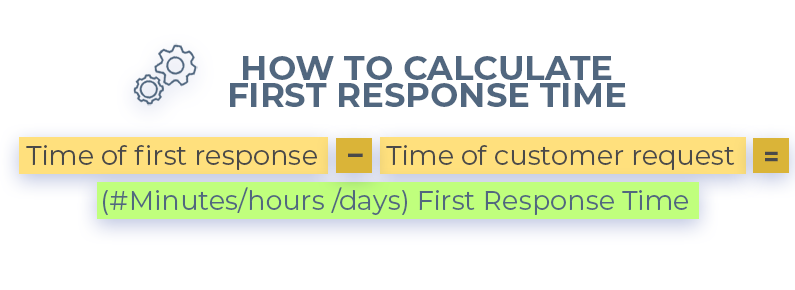
First Response Time (FRT)

The FRT is potentially the most important of the KPIs that you will find in this list, to ensure that the client is satisfied on their first contact in the shortest amount of time is the key to ensure that their business will retain a solid relationship with your service.

How to calculate First Time Response Time

Average Resolution Time (ART)

The ART shares the same space with the FRT, it is the average period that your Customer Service team takes to solve questions, needs, or issues and must remain as low and as solid as possible to ensure that clients are satisfied and returning.

How to calculate Average Resolution Time (ART)

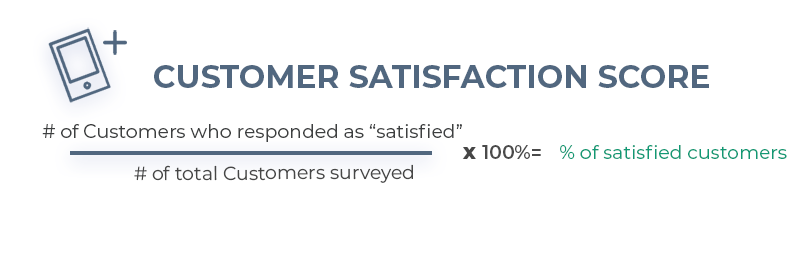
Customer Satisfaction Score (CSAT)

The CSAT stand very close to the top in this list, it stands as the KPI which helps you identify how your clients perceive the quality and effectiveness of Customer Service by asking key questions such as:

  • How satisfied are you with your interaction with Customer Service?
  • How satisfied are you with the product/service?
  • Would you have any recommendations or comments about this interaction?
  • Would you have any recommendations or comments about the product/service?
How to calculate Customer Satisfaction Score (CSAT)
Learn more about services
Request Now

Net Promoter Score (NPS)

The NPS is a measurement that together with the CSAT allows you to understand the full scope of your current client base through their satisfaction and how likely it would be for them to recommend this service to family and friends, a successful Customer Service interaction may not always produce a promoter but it will prevent detractors from arising.

How to calculate Net Promoter Score (NPS)

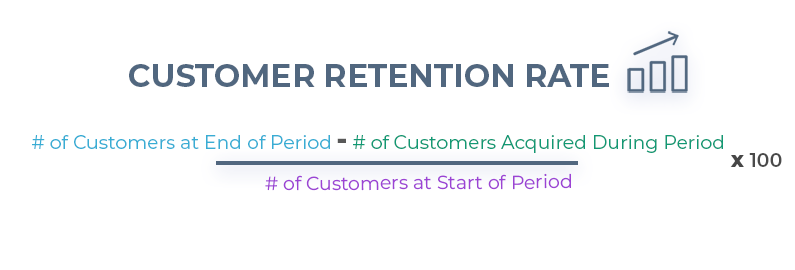
Customer Retention Rate (CRR)

The CRR may be the last in the list but it is as important as the previous items Customer Service KPIs on this list. Customer Retention is achieved through excellent service and ensuring that all client expectations are met.

How to calculate Customer Retention Rate (CRR)

From these points, we can identify how the procedures in place effectively impact the relationship between your business and your client; if these KPIs aren’t met, then actions should be taken to identify any pitfalls or improvements.

Missing out on the FRT or ART can produce a chain reaction in how your clients interact with your service; they may avoid contacting Customer Service altogether and find out other services that provide a faster and more effective response time.

The CSAT is the microscope that gives you the best insight on how satisfied your clients are with their interaction with Customer Service and your current selection of services; if this KPI is not addressed accordingly or not attended at all, your clients may feel ignored and that their opinion is of no concern to your business which in turn may produce detractors.

Interactions Would Take Your Business To The Next Level

On the other hand, by ignoring the NPS, there is ample space for a detractor base to be built and impact revenue and business; it is easier for a detractor to be born through Customer Service interactions when there are wrong procedures or concerns are ignored.

To make it clear in numbers, 41% of consumers will spend less money if they have a terrible experience; for B2B interactions, this raises to 51%, but the main difference would be that they would instead take their business elsewhere than continue with the interactions.

These numbers, in turn, will tell us that at least 41 billion dollars are lost due to these detractors, and this is a number that is only focused on the United States. [1]

Finally, ignoring the CRR allows clients to step out of the spotlight without their needs being met, their comments being heard, or their opinion is considered, building a more extensive base of detractors that generally affect the business.

Suppose the Customer Service KPIs are not assessed. In that case, there is always the possibility of losing critical business and eventually getting behind the race against competitors who take note of what is happening in their most crucial department by looking at these indicators.

Ready to jump into giving your clients world-class Customer Service and ensuring that all these KPIs are met and exceeded?

Learn more about services
Request Now

[1] https://www.retently.com/blog/nps-detractor/

https://redialbpo.com/wp-content/uploads/2020/11/5-Customer-Service-KPIs-You-Should-Be-Tracking_rev1.jpg 300 795 Veronica Mascareno https://redialbpo.com/wp-content/uploads/2026/04/rbpo_logo_color_large_black_600x209-300x105.png Veronica Mascareno2020-11-24 23:40:002026-05-22 14:19:295 Customer Service KPIs You Should Be Tracking
How customer service helps your business with a woman on headset

How Customer Service Helps Your Business

November 9, 2020/in CX and Services /by Veronica Mascareno

Customer Service is one of the key pillars of any type of business around the globe and it has an incredible impact on how a product gets handled as well as the image of the company, a Customer Service Representative is the first contact of any potential or recurring customer of any service or product.

But you may be wondering, is it true that Customer Service can truly make or break a company, and does it impact what I do?.

Bad Customer Experience Impacts More Than Sales

There are many stories out in the world about how Customer Service has made an impact in the memory of customers from excellent, to good up to complete dread. Customer Service is not only about picking up a phone and answering questions, it does not mean someone should be there to sell, it means that a complete culture and idea is expelled into the world to your customer and show them what your company is all about.

Your product may be the greatest invention of the twenty-first century, it could be what everyone needs during the time of Covid-19, but without a good team to support it, this product may as well remain in the back storage rooms and warehouses, never seeing the daylight just because someone did not know how to treat your customers.

Customer Service represents your brand image, mission and values.

This is another important factor when looking at expanding your business and looking at a Call Center or Customer Service Representative team as a business cost, this can be detrimental for your business and in turn have a lasting impact on revenue, image, and potential future Ventures.

The Impact of Bad Customer Experience on Your Business

To better understand how Customer Service can have a positive impact on your business we have produced a small list of key factors that help in keeping customer loyalty and ensuring that expectations are met and exceeded all the time:

Being honest, knowledgeable, and professional are three additional pillars that make the house of this great foundation when a Customer Service Representative can provide answers for all the questions, is honest about your product, and ensures that every interaction is made with the utmost quality there will be a returning satisfied customer every time.

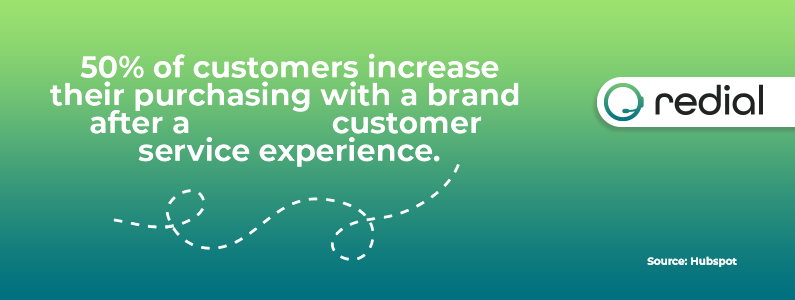
50% of customers increase their purchasing with a brand after a positive customer service experience.

Human Presence to Active Interaction

  • Automation of Customer Service tasks has been on the rise through the years, providing clients with automated response systems such as voice prompts or chatbots, while this does help remove the burden and stress on your Customer Service Frontline it is the human interaction that humans want in the end.
  • Customer Service can help you reduce the number of conflicts and issues that would arise otherwise, humans can commit errors and we understand that (to err is human)  which can be easily resolved through the four aforementioned pillars of Customer Service.
  • It is also a fact that great Customer Service can increase the revenue of your company by up to 25%[1], this through great interactions, resolving conflicts, and improving the lines of communication with customers.

With those ideas in mind we have to return to the main question, does Customer Service truly make or break a company? The answer is: absolutely.

Customer Service is the main buffer, the zone where your clients can come to find answers to all their questions and doubts, the area that exudes a shining example of your company culture and ideals, it is here that relationships can be made or broken all from how your customers feel they are being treated.

With this in mind, we can state that Customer Service is one of the primary components that every company should be looking at when deciding how to best expand their business, ensuring that their current customers are kept satisfied and coming back for more. Ready to make the jump into excellent Customer Service with a great partner in Mexico?

Learn more about services
Request Now

[1] https://ebq.com/sales-and-customer-service/

https://redialbpo.com/wp-content/uploads/2020/11/How-customer-service-helps-your-business-2.jpg 300 795 Veronica Mascareno https://redialbpo.com/wp-content/uploads/2026/04/rbpo_logo_color_large_black_600x209-300x105.png Veronica Mascareno2020-11-09 22:50:002026-05-22 14:19:29How Customer Service Helps Your Business
US customer experience is a bilingual affair

US Customer Experience is a Bilingual Affair

September 23, 2019/in CX and Services /by Veronica Mascareno

Nothing is more fascinating than a look at how the United States is evolving as a consumer market so as   And, the changes can be tracked across a wide variety of demographics. None, though, has been as pronounced as the growth of the US Spanish-speaking population.  While this trend has emerged over the past two decades, it is clear that companies across verticals continue to grapple with its impact on how they manage end-users.

But one thing is certain – an English-only strategy will not work either today or in the future.  So, enterprises must decide how they will ensure a supply of Spanish and English front-line talent and start operations with a bilingual BPO contact center.

Why You Should Offer it?

A good starting point in this discussion is to look at the US Hispanic population using a few key statistics.  Consider the sheer size of those that count themselves among this community, which the US Census Bureau places at nearly 60 million.  This is a submarket roughly the size of the United Kingdom or Italy!  And what should not be ignored is its increasing buying power. Household incomes for members of the US Hispanic community have continued to rise over time, a trend that appears to be ongoing. 

Logically, this means more consumption of services and products by American Hispanics, which will require a variety of support by agents at BPO contact center that is adept in Spanish.  But language is just one thing that BPO contact center executives need to consider in this dynamic.

Taking into account how US Hispanic community members differ from other demographics is very important in how they interact with enterprises.  For one, the service culture is different. Those with experience in the American BPO contact center space will speak of how agents have longer interactions with callers speaking Spanish (which tend to be much more conversational), compared to those who choose English. 

Equally, the need to service this community digitally will be a major factor in the coming years. This is because of the higher amount of time spent online by US Hispanics than the overall population, coupled with the fact that the majority of US Hispanics are under 30 years old.  Brands will have to be better at tailoring a digital strategy to this Spanish-first community.

Expansion opportunities Nearshore

This raises the question around the best business model to service the US Hispanic community, and BPO contact center professionals should take into account some hard realities.  The first of these is that onshore delivery simply is not viable, with low unemployment rates in the US driving up labor costs. This is notwithstanding that domestic bilingual delivery has traditionally been more expensive than English-only. 

Equally, there is offshore. Realistically though, the main locations overseas servicing the US (Philippines and India) have small numbers of Spanish speakers. That takes this option off the table. The bpo contact center nearshore is really the only choice for US enterprises, and the closer to the US the better.

This is why Mexico–the country to which most US Hispanics trace their ancestry–retains so much interest among buyers of BPO contact center services.  Not only is it closer than any other country in the nearshore, but the understanding of US commercial and popular culture cannot be compared in any other part of the region. 

The variety of delivery points in Mexico is important, too. US consumers can be supported from as far south as Mexico City, all the way to Tijuana, which borders California (where bilingualism is also pervasive).  

Bottom line – the US is no longer an exclusively English play, and enterprises need to get serious in supporting Spanish as a business line.  To avoid this reality is to simply lose business over the long term.

https://redialbpo.com/wp-content/uploads/2019/09/bpo-contact-center-880x450-1.jpg 450 880 Veronica Mascareno https://redialbpo.com/wp-content/uploads/2026/04/rbpo_logo_color_large_black_600x209-300x105.png Veronica Mascareno2019-09-23 22:50:002026-05-22 14:19:29US Customer Experience is a Bilingual Affair
Page 3 of 3123

Search our CX Blog

Recent Posts

  • CCW Las Vegas 22-25 June, 2026 - Redial BPO - Official SponsorRedial BPO Is an Official Sponsor of CCW Las Vegas 2026 — and We’re Bringing Something BigMay 19, 2026 - 12:59 pm
  • Banner for a report: The State of Insurance Verification 2026; subtitle notes AI, staffing pressure, and denials; stethoscope on the left with Redial logo.Prior Authorization Outsourcing: How Healthcare Practices Are Cutting Denials and Reclaiming Clinical TimeApril 24, 2026 - 11:17 am
  • Auto Finance Summit East 2026Redial BPO attending Auto Finance Summit East 2026April 13, 2026 - 1:02 pm
  • Redial BPO’s 9th AnniversaryCelebrating Redial BPO’s 9th Anniversary: Nine Years of Growth, People, and PurposeMarch 13, 2026 - 4:46 pm
  • Shoptalk Spring 2026Redial BPO attending ShopTalk Spring 2026March 4, 2026 - 1:50 pm

Categories

  • Awards
  • BPO
  • Customer Service
  • Customer Support
  • CX and Services
  • Events
  • Healthcare
  • Industries
  • Insurance Verification
  • Live Chat
  • News
  • Omnichannel
  • Redial Culture

PCI Logo Redial BPO

Resources

Services

Industries

Blog

Get a Quote

Services

Appointment Setting

Customer Service

Debt Collection

Email Services

Lead Generation

Live Chat

Tech Support

Transfer Services

About Us

Leadership

Contact Us

Privacy Policy

Terms of Use

Logo Redial

© 2026 Redial. All Rights Reserved.

Scroll to top