RedialBPO
  • Services
    • Call Center Solutions
    • Contact Center Solutions
    • Core Services
      • Accounts Payable and Receivable
      • Back Office Support
      • Customer Service
      • Debt Collection
      • Insurance Verification
      • Order Taking Service
      • Sales Service Inbound and Outbound
      • Tech Support
      • Upselling and Cross-Selling
      • Voice AI Services
      • Workflow Automation Services
    • Additional Services
      • Appointment Setting
      • Data Processing
      • Email Request Services
      • Lead Generation
      • Live Chat Services
      • Transfer Service
    • BPO Services
    • BPO Nearshore Services
    • BPO Offshore Services
  • Industries
    • Automotive Services
    • Financial Services
    • Healthcare Services
    • Hospitality and Travel Services
    • IT Services
    • Logistics Services
    • Retail Services
    • Telecom Services
    • Utility and Energy Services
  • Locations
    • Mexico
    • South Africa
    • Philippines
    • Follow-The-Sun Model
  • News & Events
    • Blog
    • Events
  • Company
    • About Us
    • Our Team
    • Media
    • Contact Us
  • Join Redial!
  • Get a Free Quote
  • Menu Menu

Posts about Customer Experience and Services offered by Redial BPO.

Call Center Cost Savings: How Outsourcing Cuts Spend

How to save money with a Call Center in Mexico?

September 22, 2022/in CX and Services /by Redialers Insights

Call center cost savings look simple on paper: pay less per hour, keep the same output. The math is almost never that clean. The teams that unlock the biggest savings are the ones that understand where the money actually hides, which buckets an outsourcing partner can compress, and where cutting spend quietly hurts customer experience. Redial has been building a fully staffed call center solution on this exact framework for almost a decade.

The reality is more layered. Wages are only one line item on the P&L; recruiting, real estate, technology, attrition, and management overhead often add up to more than the paycheck. A founder who signs a BPO contract for the hourly rate alone tends to leave a lot on the table, and sometimes ends up paying more in the second year than they did in-house. This piece walks through the real buckets, the traps, and the CFO-ready framework for making the call.

Show Table of Contents
Hide Table of Contents
  • The Four Buckets That Drive Call Center Cost Savings
  • In-House vs. Outsourced: A Call Center Cost Savings Breakdown
  • Beyond Wages: The Overhead That Quietly Adds Up
  • Why Nearshore Beats Pure Offshore for Cost-Conscious Buyers?
  • The Traps: When Chasing Cheap Ends Up Costing More
  • Building the Business Case for Your CFO
    • Ready to see the numbers on your specific volume and use case?
  • Frequently Asked Questions About Call Center Cost Savings
    • 1. How much can I save with call center cost savings from outsourcing?
    • 2. How fast can I see call center cost savings after transitioning?
    • 3. Do call center cost savings hurt customer experience?
    • 4. Which country offers the best call center cost savings for U.S. brands?
    • 5. How do I calculate ROI before signing a BPO contract?

The Four Buckets That Drive Call Center Cost Savings

Every serious analysis of call center cost savings should start with four buckets, not one. Direct labor gets all the attention because it is the easiest number to compare, but it usually accounts for only 55 to 65% of the total cost of running a team in-house. The other 35 to 45% is where the compounding savings live, and it is the reason a well-run BPO can charge a competitive per-seat rate and still deliver a healthy margin.

The four buckets are:

  • Direct labor: hourly wages, benefits, payroll taxes, and paid time off.
  • Operational overhead: real estate, utilities, workstations, headsets, and IT support.
  • Technology stack: dialer, CRM, quality assurance platform, WFM, and reporting tools.
  • Management and back-office: supervisors, trainers, HR, recruiting, and payroll administration.

Deloitte tracks this shift closely: the executive shift toward outcome-based outsourcing confirms that 80% of leaders plan to maintain or grow their third-party investment, and cost reduction is still one of the top three drivers.

Call Center Cost Savings Breakdown

In-House vs. Outsourced: A Call Center Cost Savings Breakdown

The clearest way to see call center cost savings is a side-by-side comparison on a modest team size, say 20 agents on an 8-hour shift, 5 days a week. According to the current U.S. median wage for a customer service representative, the loaded hourly cost of a U.S. agent (wage plus benefits, payroll tax, and overhead) sits well above the sticker rate. A nearshore team in Mexico or a hybrid nearshore-offshore setup can compress that number without cutting corners on training or QA.

Below is a simplified, illustrative annual comparison for a 20-agent inbound team. Numbers are directional; every operation is different.

Line item (annual, 20 agents)In-house (U.S.)Nearshore BPO (Mexico)
Loaded agent wagesRoughly 1.4x to 1.7x the sticker wage once benefits and taxes are addedRolled into the per-seat rate, typically 40 to 60% lower on a fully loaded basis
Real estate + utilitiesFixed lease, power, and cleaningIncluded in per-seat
Technology stackClient owns, procures, and maintainsProvider owns and maintains
Supervisor + QA + trainerAdditional headcount (roughly 1 per 12 to 15 agents)Included in per-seat
Recruiting + HRInternal team or agency feesIncluded in per-seat
Ramp-up time3 to 6 months to build the org2 to 4 weeks to plug into an existing operation

Beyond Wages: The Overhead That Quietly Adds Up

The biggest driver of call center cost savings after direct labor is the pile of costs that never make it onto a job description. Recruiting fees when an in-house agent quits (and agents quit often in this industry) can run into the thousands per replacement. Real estate for a 20-seat floor in most U.S. metros is a five-figure monthly line item on its own. Technology subscriptions renew every year, whether the team hits its numbers or not.

A BPO absorbs those costs into the per-seat rate, which is why the sticker per-hour price of an outsourced agent looks lower than it “should” if you only compare wages. This is also why outsourced customer service teams tend to hold their unit economics as headcount scales up or down, while in-house teams typically get more expensive per agent every year because of the fixed overhead sitting behind them.

Why Nearshore Beats Pure Offshore for Cost-Conscious Buyers?

Not every model of call center cost savings works the same for a U.S. brand. Pure offshore (the Philippines, India) delivers the lowest hourly rate on paper, but adds a 10 to 13-hour time-zone gap, a cultural distance that shows up in escalations, and accents that some U.S. customers still flag on CSAT surveys. Nearshore models split the difference: still cheaper than U.S. in-house, but same-time-zone, bilingual, and culturally closer to the American customer.

For most U.S. brands serving U.S. customers, nearshore is the balanced answer, and the border-city corridor is why: nearshore call center services out of Tijuana and Mexicali, along with what makes Mexico the right nearshore choice, give teams the same-day-shift synchronization U.S. supervisors expect. If you want the deeper decision framework, our post on how nearshore compares to offshore for CX teams breaks down the tradeoffs, and why the Baja corridor became the go-to nearshore hub covers the geography.

The Traps: When Chasing Cheap Ends Up Costing More

The riskiest kind of call center cost savings is the one that looks good in month one and quietly unravels by month twelve. A provider that under-invests in training will ship you agents who never make quota. A provider with 80% first-year attrition will hand you a rotating cast of new hires, each of whom lowers your CSAT for their first 60 days. The “savings” on the invoice get eaten by refunds, churn, and the executive time it takes to rebuild the program.

Watch for the warning signs early: pricing that comes in significantly below the market floor, coaches assigned to more than 20 agents, no QA cadence, opaque reporting, and a sales team that pushes back on penalty-linked SLAs. Our post on seven things every buyer should ask before signing walks through the diligence questions that separate the operators from the marketers.

Building the Business Case for Your CFO

Presenting call center cost savings to a CFO is a different exercise than presenting them to an operations team. Finance leaders do not want an hourly-rate comparison; they want the full-year P&L delta, the ramp curve, and the variance range. Frame the case around three things they can defend: total loaded cost per FCR-resolved contact, cash-flow flexibility (variable vs. fixed cost), and the specific KPI they will hold you accountable to at the six-month mark.

Then attach the risk register. What if attrition spikes? What if seasonal volume triples? What is the exit clause? A BPO partner who can answer those questions in writing has thought through the operation. One who cannot has not, and the “savings” on paper will not survive the first surge. That is the standard we hold ourselves to, and it is the standard your CFO should hold every vendor to.

Ready to see the numbers on your specific volume and use case?

Redial BPO builds nearshore and offshore programs on transparent unit economics, penalty-linked SLAs, and a training model designed to keep attrition below the industry floor. If you are comparing options for your inbound, outbound, or back-office team, we will walk you through a realistic P&L side-by-side with your in-house baseline.  Get a free quote  |  Talk to our team  |  See our follow-the-sun operating model

Frequently Asked Questions About Call Center Cost Savings

1. How much can I save with call center cost savings from outsourcing?

Most U.S. companies see 15 to 30% in operational cost savings when outsourcing to a well-managed BPO, per Deloitte survey benchmarks. Nearshore Mexico programs typically land in the 40 to 60% range on a fully loaded per-seat basis, once you factor in real estate, benefits, technology, and management overhead. The exact number depends on your baseline, volume, and complexity.

2. How fast can I see call center cost savings after transitioning?

Realistically, month three is the first month you see clean savings on the P&L. Months one and two carry ramp costs (knowledge transfer, nesting, dual-running) that partially offset the per-seat delta. From month three onward, most clients see the full run-rate savings, and by month six the program is fully absorbed into the finance model.

3. Do call center cost savings hurt customer experience?

They can, if the provider under-invests in training or picks a geography that clashes with your customer base. They do not have to. Nearshore programs with same-time-zone shifts, bilingual agents, and structured QA typically match or beat U.S. in-house CSAT within 90 days.

4. Which country offers the best call center cost savings for U.S. brands?

For U.S.-facing operations, Mexico is usually the strongest fit: same time zone as the West Coast and Mountain time, native bilingual talent, and cultural proximity to the American customer. The Philippines and South Africa offer lower absolute hourly rates but add time-zone friction and cultural distance. The right answer depends on your volume mix and the languages your customers speak.

5. How do I calculate ROI before signing a BPO contract?

Compare on a fully loaded per-contact basis, not on hourly rate alone. Build a spreadsheet with three columns (in-house today, in-house next year, outsourced) and include every cost bucket: wages, benefits, real estate, technology, recruiting, management, and the cost of turnover. Then layer in the ramp curve and the risk register. If the net-present-value delta over two years is meaningful and your CFO can defend the KPIs, the case is real.

Redial team logo
Redialers Insights

Redialers Insights is Redial BPO’s editorial voice, sharing practical perspectives on business performance, operational excellence, customer experience, and company culture.

We share real-world learnings and timely updates to offer prospective clients a clear, trustworthy view of how Redial BPO supports brands, their customers and internal teams.

redialbpo.com
https://redialbpo.com/wp-content/uploads/2021/11/MicrosoftTeams-image.png 300 795 Redialers Insights https://redialbpo.com/wp-content/uploads/2026/04/rbpo_logo_color_large_black_600x209-300x105.png Redialers Insights2022-09-22 18:17:002026-07-27 23:35:26How to save money with a Call Center in Mexico?
banner 7 things you must know

7 Things to Know Before Outsourcing Call Center Services

April 6, 2022/in CX and Services /by Veronica Mascareno

Growing your business goes hand in hand with ensuring the best, fastest, and most efficient customer experience. To ensure growth at a fraction of the cost, outsourcing your call center needs is an efficient method.

It has become clear that customer experience is now the dominating factor in ensuring that businesses stay relevant with their products and services; Microsoft stated in their 2019 survey that 95% of their clients defined customer loyalty through excellent customer experience.

Zendesk also reported in 2019 that 84% of the customers surveyed marked customer experience as a decisive factor in establishing a relationship with a business to acquire products and services.

Since these numbers continue to become more critical, primarily when customers are restricted to their homes due to the Covid-19 Pandemic, ensuring that your call center team’s growth goes hand in hand with customer experience is the most vital factor to investigate.

Moving forward, outsourcing call center operations to a nearshore partner

Reaching your goals can be done by leveraging the outsourcing call center services provided by a BPO, Business Process Outsourcing partner.

The right BPO partner will have the knowledge and experience to assist you in front and back-office operations, reducing your expense footprint while providing you with the right solutions.

When considering outsourcing call center services, you should evaluate which parts of the operation can and should move to your BPO Partner, either inbound or outbound calls. Be it a small or more significant portion of your operation, when handled by the BPO Partner, turning a cost center into a revenue center.

The appropriate BPO Partner will help you in this critical decision-making, ensuring that the transition is seamless and as transparent as possible to key stakeholders who oversee handling the call center operation’s essential tasks.

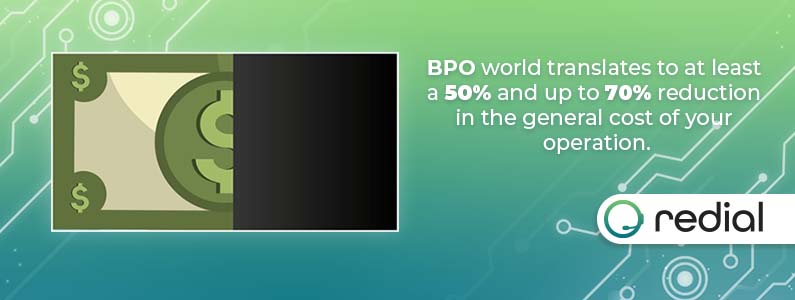
As mentioned previously, another clear benefit from outsourcing your processes come from the savings on your operation, reducing infrastructure, HR payrolls, bills, and taxes which the BPO world translates to at least a 50% and up to 70% reduction in the general cost of your operation.

money

Who should be outsourcing call center operations, and why is it important?

The move is clear and straightforward to the larger set of businesses worldwide; outsourcing to the right partner is a sure way to ensure your company can maintain an excellent level of customer experience at a fraction of the cost.

For startups and SMB, Small and Medium Size Businesses, this decision may not be apparent when multiple factors affect the business’s growth and reach. Still, a clear decision to outsource call center operations before rapid growth has started can help remove a considerable strain on fledgling businesses.

Your BPO Partner can provide support through e-mail, live chat, phone, or a combination of these that can be associated all through omnichannel support; the options are dependent on the business’s assessment.

One final consideration to perform stands in the field of return of investment; while smaller businesses can sense outsourcing call center services as a considerable expense, the return of investment becomes substantial when providing the right customer experience to an ever-growing loyal baseline of clients.

Regardless of the size of the industry you serve, the right BPO Partner can ensure that outsourcing call center services becomes efficient and, in the mid-term profitable, upholding your values and making your brand shine with every interaction your clients make.

The leverage of the right partner can also ensure that cultural and linguistic barriers are cut and kept to a minimum, putting your clients in a comfort zone when making critical decisions during the purchase of a product or service.

With the integration of multilingual customer support agents, it is also possible to give support to larger sectors interacting with your business in their language and understanding tendencies and culture, raising the bar for customer experience with a tailored experience.

Final Thoughts: Living the BPO experience through Redial BPO.

Choosing the right partner with the necessary experience in customer service and a deep understanding of your industry can be complex and challenging when considering offshore partners who are not in your time zone, show a cultural barrier, or do not understand your business field.

We have more than 45 years of experience in the BPO Industry and can help you to reap all the benefits with a fast return on investment.

Our focus ensures that your business benefits from a large pool of talent with the right mindset, ensuring that you can start running from the first setup and wow your clients on every interaction.

Leveraging the newest technologies and methodologies in the field, fast communication channels inside your time zones, and in-depth knowledge in your work line, we also ensure that the integration is seamless and beneficial.

If you have questions about what other services you can obtain from outsourcing your Call Center Operations to Mexico, you can contact RedialBPO for more information.


[1] https://info.microsoft.com/rs/157-GQE-382/images/2018StateofGlobalCustomerServiceReport.pdf

[2] https://d1eipm3vz40hy0.cloudfront.net/pdf/The_Zendesk_Customer_Experience_Trends_2019.pdf

[3] https://customerthink.com/call-center-outsourcing-pricing-around-the-world/

https://redialbpo.com/wp-content/uploads/2021/04/7THINGS-copy.png 300 795 Veronica Mascareno https://redialbpo.com/wp-content/uploads/2026/04/rbpo_logo_color_large_black_600x209-300x105.png Veronica Mascareno2022-04-06 15:07:002026-05-22 14:18:187 Things to Know Before Outsourcing Call Center Services
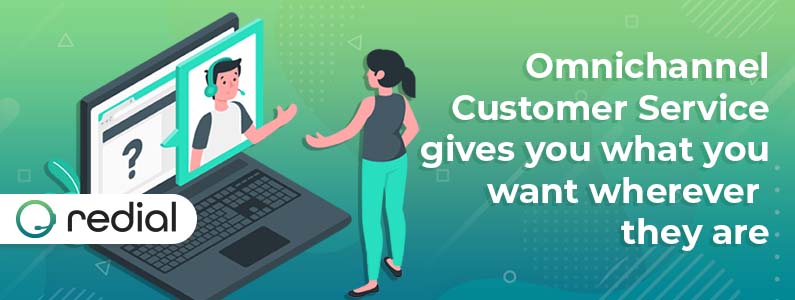
Omnichannel Customer Support: Benefits and Best Practices

Omnichannel Customer Support: Benefits and Best Practices

March 18, 2022/in CX and Services /by Redialers Insights

Customers rarely stay on one channel anymore. They open a question on live chat, follow up by email, then call when it feels urgent, and they expect the brand to keep pace at every step. Omnichannel customer support is how companies meet that expectation, because it connects every channel into one system so the experience stays consistent wherever the conversation happens. Handled well, it turns scattered, one-off interactions into a single, coherent relationship, and that relationship is ultimately what brings customers back and keeps them spending with you instead of a rival.

The pressure to get this right keeps climbing year after year. Research on customer experience shows that shoppers will pay more for a better experience, and that a single poor interaction is often enough to send them straight to a competitor. In a crowded market where products and prices look increasingly alike, the quality of service has quietly become the difference that people actually notice, talk about, and remember. Getting the experience right is no longer a nice extra to add later, it is the competitive edge itself.

Show Table of Contents
Hide Table of Contents
  • What Omnichannel Support Really Means for Your Brand?
  • Understanding the Benefits of Omnichannel Customer Support
  • Clear Communication Keeps Every Support Channel Aligned
  • Scaling Omnichannel Customer Support for Peak Seasons
  • Why Customer Retention Depends on a Connected Experience?
  • Turning Everyday Support Into a Powerful Growth Engine
  • Frequently Asked Questions About Omnichannel Support
    • 1. What is omnichannel customer support?
    • 2. What is the difference between multichannel and omnichannel support?
    • 3. Why does omnichannel customer support improve retention?
    • 4. How does a connected support model handle seasonal demand spikes?
    • 5. Can omnichannel customer support be outsourced?

What Omnichannel Support Really Means for Your Brand?

Omnichannel customer support is a service model that links every channel a customer might use, including phone, email, live chat, social, and messaging, into one connected system. Every interaction feeds a single customer profile, so context follows the person instead of getting lost between separate tools and disconnected teams. The result is a conversation that feels continuous, even when it moves across three or four channels in the same day, and the customer never feels like they are starting over from zero each time they switch.

The distinction that matters is the gap between multichannel and omnichannel, and it is an easy one to miss. Being present on many channels is not the same as connecting them, because in a siloed setup customers are forced to repeat themselves every time they switch. When the channels genuinely share data, managing the movement between channels seamlessly becomes possible, and that clean handoff is what separates a smooth, low-effort experience from a frustrating one that quietly erodes trust with every transfer.

What Omnichannel Customer Support Really Means for Your Brand?

Understanding the Benefits of Omnichannel Customer Support


The clearest advantage of omnichannel customer support is a single, unified view of every customer. When all of the data lives in one place, any agent can instantly see what someone bought, asked about, and struggled with before, no matter which channel it happened on. That context lets teams calm tense moments quickly, personalize the response, and meet people wherever they choose to reach out, whether that is a late-night phone call from another country or a quick chat window opened on a laptop during a lunch break.

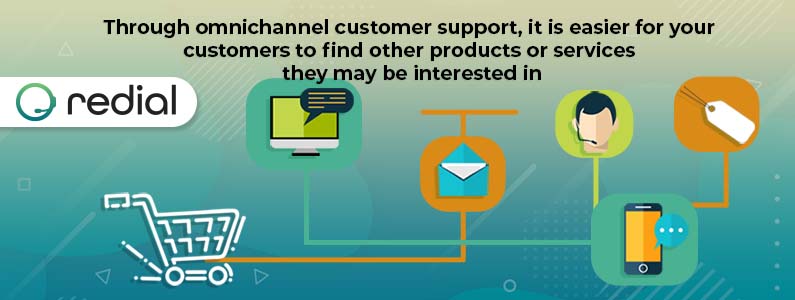
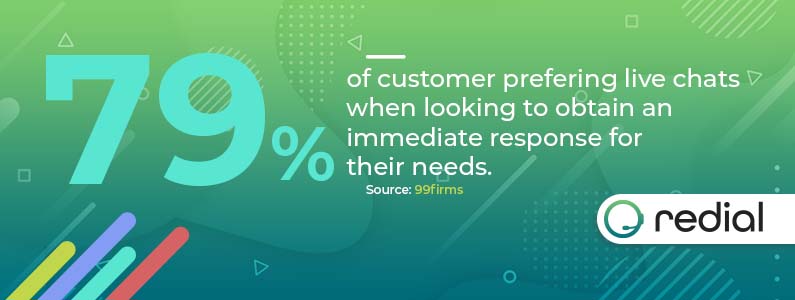
The benefits compound from there in ways that eventually show up on the balance sheet. Because the full history is visible, agents can tailor each interaction and point customers toward products that genuinely fit, which opens natural, low-pressure moments to upsell without ever feeling pushy. Real-time channels like live chat support also carry some of the highest satisfaction rates of any touchpoint, and there are clear scenarios where live chat delivers the most value for busy teams that need fast, accurate answers under pressure.

Clear Communication Keeps Every Support Channel Aligned

Connecting channels is a technology problem, but keeping communication clear is a discipline, and it is the layer that makes omnichannel customer support actually work in practice. Most service breakdowns trace back to the same handful of roots, which are unclear expectations, confusing messages, and information that never traveled from one team to the next. The system only helps if the communication flowing through it stays transparent and consistent, both with the customer on the line and with the client whose brand reputation is on the line.

Three simple habits keep that communication clean. First, ask people how they prefer to be reached, because meeting them where they already are removes friction before it ever starts. Second, default to transparency, since customers trust a brand far more when both sides can see the same information at the same time. Third, answer in a timely way every single time, and remember that preferences differ across generations, which is exactly the kind of nuance that well-run outsourced customer service teams are trained to handle day in and day out.

Understanding the Benefits of Omnichannel Customer Support

Scaling Omnichannel Customer Support for Peak Seasons

Omnichannel customer support is tested hardest when volume spikes, and nothing spikes demand quite like the holidays. Every year, holiday shopping reaches record volumes, compressing months of activity into a few frantic weeks that strain even well-staffed teams. Customers arrive with higher expectations for speed, personalization, and reliability, and one slow or clumsy reply can undo weeks of goodwill that the brand spent the rest of the year carefully building up.

Two capabilities separate the brands that thrive in peak season from the ones that buckle under the pressure. The first is the ability to scale coverage on demand, so a seasoned partner can add trained agents quickly and hold quality steady across every channel, which matters most in retail and e-commerce support where traffic can multiply overnight. The second is genuine round-the-clock coverage backed by AI-assisted voice support, because demand does not wait for business hours and always-on service has quietly shifted from a premium into a plain baseline expectation.


Why Customer Retention Depends on a Connected Experience?

Retention is where omnichannel customer support pays for itself many times over. Keeping an existing customer costs far less than winning a brand-new one, and the connected experience is what keeps people loyal in the first place rather than drifting quietly to a rival. When customers never have to repeat themselves and get the same reliable answer on every channel, effort drops and satisfaction rises, and those two shifts are among the most direct drivers of whether someone decides to stay. Loyalty, in other words, is engineered through hundreds of small, consistent moments rather than won in a single grand gesture.

The reverse is just as true, and it moves faster than most teams expect. Fragmented, inconsistent service is one of the quickest ways to lose customers who would otherwise have happily stayed, and word of a bad experience travels far and fast on social media. A connected model protects the relationships you already have, and because loyal customers tend to spend more, forgive the occasional slip, and refer others over time, the payoff shows up well beyond the support queue. Protecting that base is often the highest-return work a support team can do all year.


Scaling Omnichannel Customer Support for Peak Seasons

Turning Everyday Support Into a Powerful Growth Engine

Seen this way, omnichannel customer support stops being a cost center and starts working as a genuine growth engine for the business. Every consistent interaction reinforces trust, every remembered detail makes the next conversation easier, and every channel pulls in the same direction instead of quietly pulling apart. The businesses that treat support as part of the product itself, rather than an afterthought bolted on at the end, are the ones that turn everyday service into a durable competitive advantage that rivals find very hard to copy.

Getting there does not require building everything in house from scratch. Automation handles the routine questions while people handle the nuance and the emotion, and the real skill is blending AI with a human touch so that neither one ever gets in the way of the customer. Most brands reach a mature, reliable setup far faster by standing up a fully managed contact center than by trying to wire every channel together on their own with an already stretched internal team.Give your customers a service experience that feels effortless on every channel. Redial BPO builds nearshore and offshore teams that run all of your channels under one roof, with the communication discipline and round-the-clock coverage that keep customers loyal long after the first interaction. Ready to see it in action? Talk to our team or get a free quote, and we will show you how quickly we can stand up support built around your brand.

Frequently Asked Questions About Omnichannel Support

1. What is omnichannel customer support?

It connects every communication channel, including phone, email, live chat, social, and messaging, into one integrated system. Context carries across channels, so customers never repeat themselves and agents always see the full history behind every request.

2. What is the difference between multichannel and omnichannel support?

Multichannel means a business is present on several channels that work separately, while omnichannel means those channels are connected and share data. The practical difference is continuity, because a customer can start on chat and finish on the phone without losing context.

3. Why does omnichannel customer support improve retention?

Consistent, low-effort experiences keep customers loyal, and retaining an existing customer is far cheaper than acquiring a new one. When every channel reflects the same information, friction drops and satisfaction rises, and both feed straight into stronger retention.

4. How does a connected support model handle seasonal demand spikes?

A well-designed operation scales coverage up or down and runs around the clock, so peak periods like the holidays do not overwhelm response times. Partnering with a nearshore or offshore team makes it easier to add trained agents quickly when volume surges.

5. Can omnichannel customer support be outsourced?

Yes. An experienced BPO partner can run all channels under one roof, unify the data behind them, and provide round-the-clock coverage, often faster and at a lower cost than building the same capability in house.

Redial team logo
Redialers Insights

Redialers Insights is Redial BPO’s editorial voice, sharing practical perspectives on business performance, operational excellence, customer experience, and company culture.

We share real-world learnings and timely updates to offer prospective clients a clear, trustworthy view of how Redial BPO supports brands, their customers and internal teams.

redialbpo.com
https://redialbpo.com/wp-content/uploads/2021/03/Benefits-of-Omnichannel-Customer-Support.jpg 300 795 Redialers Insights https://redialbpo.com/wp-content/uploads/2026/04/rbpo_logo_color_large_black_600x209-300x105.png Redialers Insights2022-03-18 14:27:002026-07-28 00:07:41Omnichannel Customer Support: Benefits and Best Practices
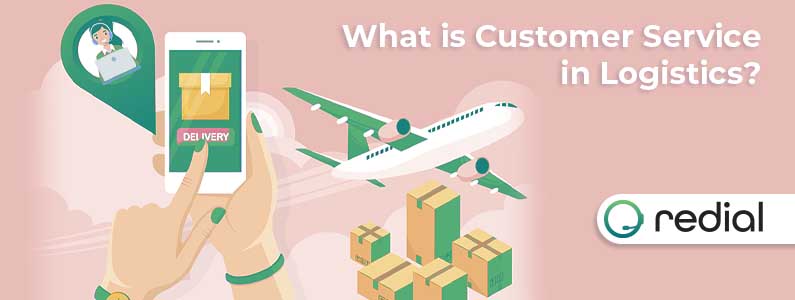
What is Customer Service in Logistics Phone and Airplane

What is Customer Service in Logistics

January 20, 2021/in CX and Services /by Veronica Mascareno

In todays world the use of logistics services has been shown time and time again that it is one of the key pillars for the economy and every business looking to achieve success, but one hidden piece of the puzzle makes everything work in harmony, Customer Service Logistics.

During the Covid-19 era this has become far more evident as the global supply chain had become stressed for important reasons, in turn making it evident that a renewal for how work is performed on the day-to-day operations needs’ considerable improvement.

There is one key factor that can help provide a better experience for businesses involved and the logistics providers, that is Customer Service Logistics.

With Customer Service becoming a turning point to add value to the experience it is an obvious investment to create an excellent experience and ensuring loyalty to the brand with returning customers.

The Goals of Customer Service in Logistics

Aside from the obvious factors there are other key items to consider when looking at Customer Service Logistics.

  • Ensuring that everything is on time, customers have little time to waste and, in this industry, every second counts, this is one of the sections where customer service in logistics excels.
  • Building trust through reliability, every service has its faults, but logistics is where every decision and action is important and impacts greatly on other parts of the supply chain.
  • Ensuring the price is right, while businesses can consider customer service to be an expense this is the opposite, it ensures that other parts of the business work and can have visibility on issues, saving time, trust and in turn saving money and returning the benefits to the client.
  • Stretching to meet the goal, we know that rules are firm and are there for a reason but customer service in logistics also ensures that there is space for flexibility from all sides to ensure that success is achieved for all parties.

A Helping Hand for the Day-to-Day Tasks

On the other side of the spectrum, customer service can help with some of the key needs of customers such as:

  • Supply Chain Management, one of the most complicated factors in every business is ensuring there is success in every step of the way in the Supply Chain. Here customer service can assist in connecting pieces of the business that may have a hard time engaging each other and providing a middle ground for understanding.
  • Shipping and Freight Services, be it by air, ground, or sea the package must be delivered, from its origin to its destination no matter when in the world it is. Customer Service Logistics ensures that the right path and method are chosen for the delivery to be made in the fastest and most effective way possible.
  • Warehousing Services, while in some instances delivery is considerably fast there are times in which the package will have to wait for someone to come pick it up, here customer service logistics can ensure that this is in the right location at the right time, making sure it also moves when needed, keeping an eye on it to avoid losses for the business.

Customs and Insurance.

  • There are additional factors that the business may not be aware of if they do not have enough experience with certain regions or countries. Here is where customer service logistics can ensure that there is an easier time for the package to move through locations without being stuck in one place due to missing paperwork, losing time in return, and then back to the customer.
  • Additional guidance and whatever comes next, as the industry evolves so will businesses and the customer service experience, by keeping everyone in the loop with continuous training and ensuring that everyone is in the know the customer service agents for customer service logistics can ensure that every package goes through the required procedures without missing a beat.

It is a fast-moving world and losing a beat can mean losing your business, creating an engaging experience can sound like a challenge but here is where a BPO Partner can assist you in ensuring that your business remains ahead of the competition.

We have more than 45 years of experience in the BPO Industry and can help you to reap all the benefits with a fast return on investment. If you have questions about what other benefits you can obtain from outsourcing your Call Center Operations to Mexico, you can contact RedialBPO for more information.

https://redialbpo.com/wp-content/uploads/2021/01/What-is-Customer-Service-in-Logistics.jpg 300 795 Veronica Mascareno https://redialbpo.com/wp-content/uploads/2026/04/rbpo_logo_color_large_black_600x209-300x105.png Veronica Mascareno2021-01-20 23:31:002026-05-22 14:19:28What is Customer Service in Logistics
How to Choose the Outsourcing Call Center Partner in Mexico

How to Choose the Best Outsourcing Call Center Partner in Mexico

January 4, 2021/in CX and Services /by Redialers Insights

Most companies researching outsourcing call center to Mexico start by comparing hourly rates. That is the wrong first move. Rate tells you what a provider charges. It tells you nothing about whether your customers hang up satisfied, and that is the number that actually shows up in your revenue.

The case for outsourcing call center to Mexico is strong, and the reasons are covered below. But the country is not the decision. The partner is the decision. Two providers in the same Tijuana office park can deliver completely different outcomes. This guide covers why the move works, then gives you a seven-factor checklist for choosing who you actually sign with.

Show Table of Contents
Hide Table of Contents
  • Why Outsourcing Call Center to Mexico Works
  • 7 Factors to Check Before Outsourcing Call Center to Mexico
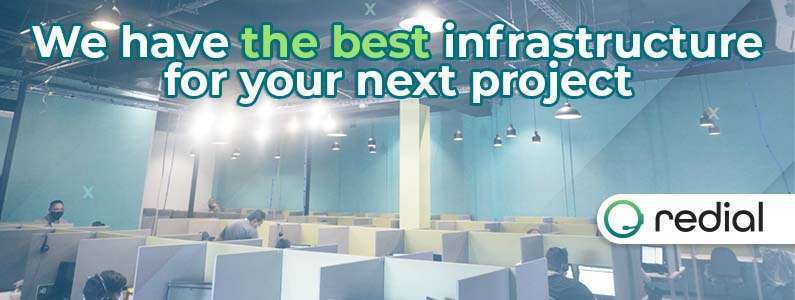
    • 1. Infrastructure: What the Operation Actually Runs On
    • 2. Campaign and Industry Experience
    • 3. Onboarding: The Clearest Early Signal You Will Get
    • 4. Language and Cultural Fit
    • 5. Support Staff and the Bench Behind Them
    • 6. Does the Provider Actually Want to Be a Partner?
    • 7. Service Fit: Does the Catalog Match Where You Are Going?
  • The 7-Factor Scorecard for Outsourcing Call Center to Mexico
  • Is Outsourcing Call Center to Mexico Right for Your Business?
  • Let's Talk About Your Call Center Strategy
  • Frequently Asked Questions About Outsourcing Call Center to Mexico
    • 1. What are the benefits of outsourcing call center to Mexico?
    • 2. What should I look for in an outsourcing call center partner in Mexico?
    • 3. How do I start outsourcing call center to Mexico?
    • 4. Is outsourcing call center to Mexico cheaper than the Philippines or India?
    • 5. Should I outsource multiple processes to the same partner?

Why Outsourcing Call Center to Mexico Works

Three advantages do most of the work behind outsourcing call center to Mexico, and only one of them is cost.

  • Time zone alignment. Agents in Mexico work your hours. An escalation raised at 2pm gets resolved at 3pm, not tomorrow morning. Offshore support buys you a lower rate and charges you a full business day for every correction.
  • Cultural fluency. The US and Mexico share centuries of overlapping commerce, language, and culture. Agents in border cities carry the accents, idioms, and references your customers already recognize.
  • Depth of talent. Mexico has a mature call center industry, which means a real pool of trained agents, supervisors, and QA staff rather than a building full of new hires.

This is part of why more US companies are relocating operations closer to home rather than defaulting to farther offshore destinations. The scale is not marginal: in an analysis based on trade data, the Inter-American Development Bank put the nearshoring opportunity across Latin America at roughly 78 billion dollars a year in additional exports, with about 14 billion of that in services rather than goods, and Mexico positioned to capture the largest single share.

If you are still weighing the country itself rather than the partner, how nearshore and offshore call centers compare is the better starting point. If Mexico is already decided, the rest of this article is the part that matters.

How to Choose the Best Outsourcing Call Center Partner in Mexico

7 Factors to Check Before Outsourcing Call Center to Mexico

Get most of these right and the partnership quietly works. Get one badly wrong and no discount cover the cost of unwinding it.

1. Infrastructure: What the Operation Actually Runs On

Infrastructure is where outsourcing call center to Mexico either scales or stalls. It splits into two layers, and a provider can be strong in one and thin in the other.

  • Regional infrastructure is the city around the operation: power reliability, connectivity, transit for agents, and physical room to expand into.
  • Business infrastructure is what the center itself runs on: workstations, redundant power and internet, physical and data security, and the software stack agents live in all day.

Mexico’s capacity here has kept up with demand. Mexico’s expanding industrial infrastructure is projected to reach 477 industrial parks across 28 states in 2026, with over 100 more under construction, which has made border and near-border cities steadily more viable for operations that need reliable facilities and room to grow into.

A provider with real infrastructure depth will not just absorb today’s volume, it will absorb next year’s without a visible dip in service. That is the difference between a partner you scale with and one you outgrow.

2. Campaign and Industry Experience

Experience is not one thing. Separate the layers before you evaluate it.

  • Role experience: customer support, sales, technical support, billing, collections.
  • Vertical experience: logistics, finance, ecommerce, healthcare. Each carries its own escalation patterns and seasonal rhythms.
  • Org-wide experience, from frontline agents up through supervisors and QA.
  • Process maturity. A provider who has run comparable campaigns already knows where your volume will spike and where quality usually slips.

The fastest way to test these costs nothing. A provider with real vertical depth asks sharper questions during the sales conversation than one reciting a generic capabilities pitch. Listen for who is interviewing whom.

3. Onboarding: The Clearest Early Signal You Will Get

How a provider runs onboarding tells you how they will run everything else. Providers with a tested methodology move faster because the staff, tools, and training material already exist before your contract is signed, rather than being assembled around your account after the fact.

  • Experienced partners follow a proven, repeatable ramp-up process instead of improvising one per client.
  • Staff and resources should be ready when terms are agreed, not recruited afterward.
  • Good onboarding surfaces gaps early, while there is still time to fix them, instead of letting them harden into recurring complaints.
  • Shared time zones mean a correction goes live the same day rather than costing a full cycle of back and forth.

That last point is where nearshore quietly earns its keep, and it is a large part of why Tijuana has become a nearshore hub for US companies.

Outsourcing call center to Mexico: Onboarding process

4. Language and Cultural Fit

Teams that succeed at outsourcing call center to Mexico usually credit cultural fit before they credit cost. It is the factor buyers underestimate most, because it never appears on a rate card. It appears in the transcript.

Agents in border cities like Tijuana often carry the accents, idioms, and references a US customer already recognizes. That shortens the distance between an answer that is technically correct and one that sounds like it came from someone who actually understands the caller. Proximity buys logistics. It also buys cultural fluency, and the second one is far harder to train from scratch.

For businesses serving Spanish-speaking customers too, bilingual coverage stops being a nice-to-have and becomes the whole reason a Mexico-based partner outperforms a cheaper alternative eight time zones away. Redial builds its customer service programs on exactly this.

5. Support Staff and the Bench Behind Them

The people layer is easy to underweight, because it is invisible in a proposal deck. It should not be.

  • A deep talent pool means faster staffing when a program has to scale on short notice.
  • Training periods shorten when new hires already understand call center fundamentals before they ever touch your brand.
  • Agents must be retrained continuously as your product, pricing, or policies change, not trained once at launch and left to drift.
  • Quality holds from the first call to the thousandth only when there is a real bench behind the frontline. Turnover is inevitable in this industry. Depth is what absorbs it.

For multichannel or higher-volume programs, this is also where a provider’s contact center solutions capability matters, since running voice, chat, and email well requires supervisory structure, not just headcount.

6. Does the Provider Actually Want to Be a Partner?

Companies weighing outsourcing call center to Mexico almost never ask this question, and it is the one that separates a partner from a vendor. Capability can be verified on a site tour. Posture only reveals itself in how a provider engages before there is any contract to protect.

Watch for four things:

  • Interest in your business, not just your volume. A provider with real industry experience understands what you do in the first conversation and does not need your category explained twice.
  • Understanding of your culture and vision. A partner who knows your objectives, and how you want customers treated, makes better calls in the moments no script covers. Those moments are most of the job.
  • A stake in how your brand looks. Those agents represent you, not them. A partner who treats that as their responsibility, rather than something for you to police, produces a measurably different quality of interaction.
  • Flexibility and headroom. If your business doubles, the partner has to double with it without renegotiating the relationship from zero.

7. Service Fit: Does the Catalog Match Where You Are Going?

The last factor pays off in year two, not month one. Do not evaluate a provider only against what you need today.

  • Confirm their current offerings cover your existing line of business. A mismatch here is a hard blocker, not a negotiation.
  • Then look at everything else they run. If the same partner can take on processes you may want to move later, you avoid onboarding a second vendor, splitting your line of communication, and coordinating two contracts through every critical change.
  • Vendor sprawl quietly eats the savings that motivated outsourcing in the first place. Consolidating with one capable partner protects them.
  • Look for adjacent services worth testing, such as lead generation, which can open a market segment you are not currently reaching.

The 7-Factor Scorecard for Outsourcing Call Center to Mexico

Print this, fill in a column per provider, and the shortlist tends to sort itself out.

FactorWhat Good Looks LikeQuestion to Ask
InfrastructureRedundant power and connectivity, secure facilities, room to expandWhat is your uptime history and backup setup?
ExperienceProven track record inside your specific verticalWalk me through a client in my industry
OnboardingDocumented, tested ramp-up with a clear timelineHow long until a new program is live?
Language and CultureEnglish fluency with US business context, bilingual where neededHow do you measure cultural fluency after launch?
Support StaffDeep bench of agents, supervisors, and QA, with ongoing retrainingAgent-to-supervisor ratio? Average tenure?
Partnership PostureUnderstands your business, flexible, invested in your brandWhat do you already know about my industry?
Service FitCatalog covers today’s needs and next year’s expansionWhat do clients like me add in year two?

Is Outsourcing Call Center to Mexico Right for Your Business?

For most US companies handling meaningful support or sales volume, yes. But the honest answer depends on what you are optimizing for.

If your priority is…Mexico is…Because
Same-day resolution and tight coordinationThe strongest fitShared time zones remove the one-day lag that offshore support builds into every correction
Bilingual English and Spanish coverageThe strongest fitBorder-city talent pools are natively bilingual with US cultural context
The absolute lowest hourly rateNot the cheapest optionOffshore rates are lower. The gap tends to reappear as turnover, escalations, and churn
A vendor you never speak to againProbably overkillMexico earns its premium through proximity and collaboration. If you will not use them, you are paying for them anyway

Redial BPO built its operation around call center services based in Mexico for the reasons above rather than in spite of them, and has watched the real value of nearshore call centers in Mexico play out across ecommerce, finance, and logistics accounts. Why companies choose Mexico covers the country-level case in more depth.

Is Outsourcing Call Center to Mexico Right for Your Business?

Let’s Talk About Your Call Center Strategy

The seven factors above are the right starting checklist, but no two businesses weigh them the same way. A high-volume ecommerce operation prioritizes elastic scale and seasonal flexibility. A financial services team prioritizes security posture and agent tenure. A healthcare practice cares about accuracy above all.

Contact us to talk through which of the seven actually matter for your operation, or get a free quote to see what outsourcing call center to Mexico looks like at your volume.

Outsourcing call center to Mexico Quote

Frequently Asked Questions About Outsourcing Call Center to Mexico

1. What are the benefits of outsourcing call center to Mexico?

Three reasons: your agents work your hours, so escalations resolve the same day instead of the next one; border-city talent pools are natively bilingual and carry US cultural context; and Mexico has a mature call center industry with a deep bench of trained agents and supervisors. Cost matters, but it is rarely the deciding factor.

2. What should I look for in an outsourcing call center partner in Mexico?

Seven factors: infrastructure, industry experience, onboarding process, language and cultural fit, support staff depth, whether the provider behaves like a partner rather than a vendor, and whether their service catalog covers where your business is heading. A strong provider performs across all seven, not just the two that are easiest to demo.

3. How do I start outsourcing call center to Mexico?

Shortlist providers against the seven factors above, then run each one through the onboarding question. Experienced partners can bring a new program live within a few weeks, because the staff, infrastructure, and training process already exist before the contract is signed. Timelines stretch when a business needs heavy system integration or a highly custom setup.

4. Is outsourcing call center to Mexico cheaper than the Philippines or India?

Usually not on rate alone. Offshore hourly rates tend to be lower. The comparison changes when you count the cost of a full business day lost to every correction, higher escalation rates, and the customer churn that follows a support experience that feels distant. Mexico competes on total cost, not on sticker price.

5. Should I outsource multiple processes to the same partner?

Usually yes, if the partner is capable across them. One provider means one line of communication, one contract, and faster rollout when something changes. Splitting processes across vendors creates coordination overhead that quietly erodes the savings that motivated outsourcing in the first place.

    •  
Redial team logo
Redialers Insights

Redialers Insights is Redial BPO’s editorial voice, sharing practical perspectives on business performance, operational excellence, customer experience, and company culture.

We share real-world learnings and timely updates to offer prospective clients a clear, trustworthy view of how Redial BPO supports brands, their customers and internal teams.

redialbpo.com
https://redialbpo.com/wp-content/uploads/2021/01/How-to-choose-the-best-Outsourcing-Call-Center-partner-in-Mexico.jpg 300 795 Redialers Insights https://redialbpo.com/wp-content/uploads/2026/04/rbpo_logo_color_large_black_600x209-300x105.png Redialers Insights2021-01-04 19:20:002026-07-16 15:22:37How to Choose the Best Outsourcing Call Center Partner in Mexico
4 Benefits of Live Chat Your Business Should Not Ignore

4 Benefits of Live Chat Your Business Should Not Ignore

December 30, 2020/in CX and Services /by Veronica Mascareno

Most customers do not want to call, and they do not want to wait for an email reply either. They want an answer while they are still on your site, still deciding, still holding a question that could make or break the sale. That gap is where the benefits of live chat show up most clearly: it gives customers a fast, low friction way to get unstuck, without pulling them off the page they were already on.


This guide walks through five real scenarios where live chat changes the outcome of a customer interaction, what to weigh before adding it to your support mix, and how to think about the cost and staffing side of running it well.

  • What Makes Live Chat Different From Phone and Email
  • Are the Benefits of Live Chat Worth It for Your Business?
  • 1. What are the benefits of live chat for a business?
  • 2. How live chat compares to phone and email support
  • 3. Whether live chat helps reduce cart abandonment
  • 4. How much live chat typically costs compared to phone support
  • 5. Industries that see the clearest benefits of live chat

Rethinking your day to day operations.

What Makes Live Chat Different From Phone and Email

Live chat lets a customer keep browsing while getting help, which is something phone and email cannot offer. There is no hold music, no waiting for a callback, and no context lost between the question and the answer, since the agent can see exactly where the customer is having trouble and respond in real time.

It also handles volume differently. A single agent can manage several chat conversations at the same time, something no phone agent can do, which is part of why chat tends to cost less per interaction than a call while still keeping response times short.

4 Benefits of Live Chat for Your Business

Some of these will be obvious the moment you read them. Others only become clear once you have watched a real support queue struggle without this option.

1. 24/7 Support for Customers Worldwide

A business with customers across time zones needs a way to answer questions outside a normal 9 to 5, and live chat is one of the more practical ways to do that without asking a small team to work overnight shifts. Peer-reviewed research on live chat satisfaction, published in the journal Computers in Human Behavior, found that service quality, information quality, and system quality all shape how satisfied a customer feels with a chat interaction, with wait time consistently playing a central role in that experience.

Live chat can meet that expectation through a distributed team model, agents in different time zones covering different shifts, rather than forcing one location to staff every hour of the day. That structure lets customers get help exactly when they need it, not just when your headquarters happens to be open, which is one of the clearest benefits of live chat for any team with customers outside a single time zone.

2. Benefits of Live Chat: Multilingual Chat for International Customers

Offering support in a customer’s own language changes how an interaction feels, not just whether it gets resolved. Chat makes that easier to deliver consistently than phone support does, since agents can be routed by language without the customer needing to know which number to call.

This matters even more for businesses supporting customers with visual or hearing limitations, since a well built chat widget can offer accommodations that a phone line simply cannot, from screen reader compatibility to text based interaction that does not depend on hearing a voice clearly.

3. Guiding Confused Customers Toward a Decision

The core value of live chat is response time. A customer with a real question about a product or service does not want to dig through a help center, they want a direct answer from someone who can look at their specific situation.

  • Agents can pull information from a live database instead of reciting a script, so answers stay current with what is actually being offered
  • Clearing up confusion in the moment prevents a hesitant browser from simply leaving the site
  • A resolved question is also a natural opening to mention a related product or service, without it feeling like a hard sell

This shows up most clearly in ecommerce, where independent checkout research puts the average cart abandonment rate at just over 70 percent across the industry, and an unanswered question about sizing, shipping, or a return policy is a common reason a shopper leaves without buying. A chat widget placed at the moments customers hesitate most, product pages and checkout, gives a business a chance to answer that question before the tab gets closed. For online sellers specifically, this is one of the most measurable benefits of live chat, since it is less about customer service as a cost center and more about recovering revenue that would otherwise walk away.

4. Defusing Tough Situations and Angry Customers

Some interactions arrive already tense, a bad experience, a confusing bill, a product that did not work as expected. Live chat gives a business a fast way to intervene before frustration turns into a lost customer or a public complaint.

A quick, competent response in the moment often saves the sale and surfaces a real process issue worth fixing. It also creates a written record of what went wrong, which is useful for spotting patterns that a phone call would never leave behind.

Reducing Cart Abandonment for Ecommerce Businesses

Ecommerce is where live chat tends to pay for itself fastest. Independent checkout puts the average cart abandonment rate at just over 70 percent across the industry, and an unanswered question at checkout, about sizing, shipping, or a return policy, is a common reason a shopper leaves without buying.

A chat widget placed at the moments customers hesitate most, product pages and checkout, gives a business a chance to answer that question before the tab gets closed. For online sellers specifically, this is less about customer service as a cost center and more about recovering revenue that would otherwise walk away.

Are the Benefits of Live Chat Worth It for Your Business?

For most businesses handling any real volume of website traffic, yes, because the benefits of live chat outweigh a phone-only setup: it meets the customer at the exact moment they are deciding whether to buy, stay, or leave. The math tends to work in its favor too, since one agent handling several chats at once typically costs less per interaction than staffing an equivalent phone queue.

The bigger question is usually not whether to add live chat, but how to staff it well. A clear view of the metrics that matter (response time, resolution rate, satisfaction) makes it much easier to tell whether a chat program is actually working, instead of just assuming it is because the widget is live.

Common Concerns About Adding Live Chat

Some teams worry that chat just adds another channel to monitor without reducing the load anywhere else. That worry usually undersells the benefits of live chat once it is staffed properly, since a chat program that is properly staffed tends to pull volume away from phone and email, not add to it, because customers who can get a fast answer in chat usually take that option over waiting on hold.

Others worry chat cannot handle a real support workload the way phone can. Modern chat tools support file sharing, screen context, and smooth handoff to a human agent when a bot reaches its limit, and pairing live chat with a broader omnichannel strategy tends to close that gap rather than leave it open.

Free Quote Keep & Benefits of Live Chat

Let’s Talk About Your Live Chat Strategy


Redial BPO builds and staffs live chat programs that deliver the benefits of live chat as part of a broader customer service operation, not as a bolted on extra. Agents are trained on your product catalog and brand voice, and increasingly work alongside AI assisted tools that handle the repetitive questions so human agents can focus on the moments that actually need a person, something we cover in more detail in how we scale customer service with AI without losing the human touch.


Get a free quote to see what staffing a live chat program would look like for your traffic volume, or contact us if you would rather talk through where your current support is falling short first.


Frequently Asked Questions of the benefits of live chat

1. What are the benefits of live chat for a business?

The benefits of live chat include a faster path from question to purchase decision, lower cost per interaction than phone support, and the ability for one agent to handle several conversations at once. It also gives customers a way to get unstuck without leaving the page they are already on.

2. How live chat compares to phone and email support

Live chat resolves questions faster than email and does not require a customer to wait on hold the way phone support often does. It works best alongside phone and email rather than replacing them, since some customers still prefer to talk through complex or sensitive issues out loud.

3. Whether live chat helps reduce cart abandonment

Yes, when it is placed at the points where shoppers hesitate most, typically product pages and checkout. Unanswered questions about sizing, shipping, or returns are a common reason online shoppers abandon a purchase, and a chat widget gives a business a chance to resolve that hesitation before the customer leaves.

4. How much live chat typically costs compared to phone support

Live chat generally costs less per contact than phone support, largely because one agent can manage several conversations at once instead of being tied to a single call.

5. Industries that see the clearest benefits of live chat

Ecommerce and retail see some of the clearest benefits of live chat, since chat directly intercepts purchase hesitation, but any business with a website and a real volume of customer questions, from healthcare to financial services, tends to benefit from having a fast, low friction way to answer them.


https://redialbpo.com/wp-content/uploads/2020/12/4-Scenarios-Where-Live-Chat-Can-Help-Your-Business.jpg 300 795 Veronica Mascareno https://redialbpo.com/wp-content/uploads/2026/04/rbpo_logo_color_large_black_600x209-300x105.png Veronica Mascareno2020-12-30 00:17:002026-07-13 08:57:244 Benefits of Live Chat Your Business Should Not Ignore
Why Banks Need a Banking Call Center Infrastructure

Why Banks Need a Banking Call Center Infrastructure

December 15, 2020/in CX and Services /by Redialers Insights

Through our work with banking institutions across various segments, we’ve observed one undeniable truth: a bank without a dedicated banking call center is operating with a fundamental competitive disadvantage. The question isn’t whether banks need one, it’s how quickly they can implement one effectively and what strategic advantages they’ll gain by doing so.

The good news: banks no longer need to choose between accessibility and cost control. At Redial BPO, we help financial institutions build the right infrastructure through dedicated financial services call center solutions designed specifically for banking, lending, and regulatory complexity. Whether you are launching your first call center or rethinking an existing one, the goal is the same: consistent, compliant, around-the-clock support that customers trust.

Table of Contents: Why Every Bank Needs a Call Center

  • Understanding Why Banks Need a Call Center
  • The Compelling Business Case: Why Banks Need a Call Center
    • Operational Cost Reduction
    • Enhanced Customer Experience and Satisfaction
    • Increased Productivity and Strategic Flexibility
  • Essential Services Every Banking Call Center Should Provide
  • Building Versus Outsourcing: Strategic Considerations
    • The Challenges of Internal Call Center Operations
    • The Strategic Advantages of Outsourced Banking Call Centers
  • Real-World Impact: What the Data Shows
  • Taking Action: Implementing Your Banking Call Center Strategy
  • Ready to Explore Professional Call Center Solutions?
  • FAQ: Why Every Bank Needs a Call Center

Understanding Why Banks Need a Banking Call Center

Banking represents one of the most relationship-intensive industries in existence. The average banking customer initiates multiple interactions per week through various channels. Business banking clients may interact with their bank dozens of times daily. Each interaction represents an opportunity to build loyalty or create frustration that drives customers to competitors.

Consider the complexity of modern banking operations. Customers need assistance with account openings, loan applications, fraud investigations, payment disputes, technical support for digital banking platforms, investment advice, and countless other services. Without a professional banking call center infrastructure, banks face several critical challenges:

Limited accessibility creates immediate customer dissatisfaction. If customers can only resolve issues during branch hours or by visiting physical locations, they will quickly look for more accessible alternatives. In our connected world, customers expect 24/7 support for their financial needs.

Operational inefficiency drains resources and frustrates both customers and staff. When branch employees spend significant portions of their day answering phones and handling routine inquiries, they cannot focus on high-value activities like relationship building, complex problem-solving, and business development.

Inconsistent service quality emerges when untrained staff handle diverse customer inquiries without proper systems, scripts, or quality monitoring. This inconsistency damages brand reputation and customer confidence.

Scalability limitations prevent growth. Without dedicated call center infrastructure, banks struggle to handle demand spikes, expand to new markets, or launch new products that generate increased customer inquiries.

As we’ve explored in our analysis of challenges for financial companies, these operational pressures require strategic solutions that address both efficiency and customer experience simultaneously.

Essential Services Every Banking Call Center Should Provide

The Compelling Business Case for a Banking Call Center

From our extensive work with financial institutions, the ROI on banking call center investment is exceptionally strong for banking organizations. Let’s examine the specific benefits we’ve observed across our client base.

Operational Cost Reduction

This might seem counterintuitive, investing in a call center to reduce costs, but the economics are straightforward. Research consistently shows that branch employees and managers spend approximately one-third of their time handling customer inquiries and questions. This represents an enormous opportunity cost.

Branch staff are expensive resources. They require premium office space in high-traffic locations, comprehensive benefits packages, and extensive training. When these expensive resources spend hours daily answering routine questions that could be handled by specialized call center representatives, banks are dramatically overpaying for basic customer service.

By implementing professional call center services, banks redirect these routine inquiries to specialized teams while allowing branch staff to focus on high-value activities like complex financial advisory, business banking relationships, and loan origination. The financial impact is substantial: many banking institutions achieve 30-50% cost reduction in customer service operations while simultaneously improving service quality.

Enhanced Customer Experience and Satisfaction

Customer expectations for banking accessibility have fundamentally changed. Modern consumers expect immediate access to support regardless of time or day. They want quick resolution to issues without visiting branches or waiting until business hours.

A dedicated banking call center provides multiple critical customer experience advantages:

24/7 availability ensures customers can always reach support when they need it. Financial emergencies do not respect business hours, lost cards, suspicious transactions, urgent transfers, and payment issues require immediate attention. Banks that provide round-the-clock support build trust and loyalty.

Reduced wait times improve satisfaction dramatically. Professional call centers implement sophisticated workforce management, ensuring adequate staffing during peak periods and minimizing customer hold times. Nearshore services in Mexico enable banks to maintain coverage across all time zones efficiently while controlling costs.

Specialized expertise delivers better outcomes. Call center representatives receive focused training on banking products, systems, and common customer scenarios. This specialization means faster resolution, fewer escalations, and more confident customer interactions.

Consistent service quality across all touchpoints reinforces brand standards. Professional call centers implement quality monitoring, coaching programs, and performance metrics that ensure every customer receives the same high-quality experience.

Increased Productivity and Strategic Flexibility

The operational efficiency gains from dedicated call centers extend far beyond simple cost reduction. Banks experience productivity improvements across multiple dimensions:

Branch operations become more efficient when staff can focus on complex, high-value interactions rather than fielding phone calls throughout the day. A well-designed banking call center can process 3-4 times more customer interactions per representative compared to branch-based phone support through specialization and proper tooling.

Digital channel adoption increases when call centers proactively educate customers about mobile banking apps, online portals, and self-service tools. This education reduces future service costs while improving customer independence.

One of the most valuable but often overlooked benefits is the operational flexibility that professional call centers provide banking institutions. Demand fluctuations occur regularly in banking, month-end spikes, tax season increases, promotional campaign responses, and unexpected events that drive customer inquiries. Call centers can quickly scale staffing to match demand without the long hiring cycles and fixed costs of branch employees.

Essential Services Every Banking Call Center Should Provide

Based on our experience working with financial institutions, effective banking call centers deliver a comprehensive range of services that address the full spectrum of customer needs:

Account management and information services represent the highest volume of customer contacts, including balance inquiries, transaction histories, and routine account modifications.

Payment and transaction support addresses issues with bill payments, wire transfers, card services, and transaction disputes, particularly critical when time-sensitive payments encounter problems.

Technical support and digital banking assistance help customers navigate mobile apps, troubleshoot login issues, and use advanced features like mobile check deposit or digital payment platforms.

Loan and credit services handle pre-qualification questions, application status checks, and credit card support, interactions that often represent significant revenue opportunities when handled professionally.

Fraud prevention and security services have become critical banking functions, requiring immediate access to knowledgeable representatives who can secure accounts, investigate issues, and initiate resolution processes.

These comprehensive capabilities align with the essential strategies for success in the banking business that we’ve identified as crucial for maintaining competitive advantage.

Building Versus Outsourcing: Strategic Considerations

When banking executives consider call center strategy, the question of internal versus outsourced operations consistently arises.

The Challenges of Internal Call Center Operations

Building and operating an internal banking call center requires substantial investment: capital expenditure in technology infrastructure, operational expertise in specialized call center management, continuous recruiting to address industry-high turnover rates, fixed cost structures that create inefficiency, and limited scalability that restricts growth and flexibility.

The Strategic Advantages of Outsourced Banking Call Centers

Professional BPO providers specializing in financial services offer compelling advantages. Our BPO Financial Services operations are purpose-built for banking requirements, with representatives trained in financial products, regulatory compliance, and banking systems.

Cost efficiency through outsourcing is dramatic. Our bpo services in Mexico typically deliver 40-50% cost savings compared to equivalent U.S. operations while maintaining or improving service quality. This efficiency stems from labor cost advantages, economies of scale across multiple clients, and specialized operational expertise.

Rapid scalability enables banks to match capacity to demand. Whether handling seasonal fluctuations or supporting rapid growth, outsourced operations can quickly adjust staffing levels without the delays and costs of internal hiring.

24/7 coverage across multiple time zones becomes economically viable through geographic diversification. Our facilities in strategic locations provide native English-speaking support during hours when North American labor costs would be prohibitive.

Access to advanced technology without capital investment allows banks to leverage sophisticated systems for workforce management, quality monitoring, and customer analytics that might not justify standalone investment.

Risk mitigation through geographic and operational diversification ensures business continuity even when unexpected events affect specific locations or regions.


Compelling Business Case for a Banking Call Center


Real-World Impact: What the Data Shows about Banking Call Center Infrastructure

Our banking call center clients consistently demonstrate the tangible value that professional call centers deliver:

One regional bank we work with calculated that their 50 branch employees spent an average of 2.5 hours daily handling phone inquiries, equivalent to 15.6 full-time employees devoted to activities that could be handled more efficiently by specialized call center representatives.

By implementing our dedicated banking call center solution, the financial impact included $1.2 million in annual savings through reduced branch labor costs, 35% improvement in customer satisfaction scores, 40% reduction in average resolution time for customer inquiries, and significant increase in branch employee productivity focusing on relationship building and complex transactions.

Another client, a community bank expanding into multiple markets, faced the challenge of providing consistent customer service across growing geographic footprint. Our centralized call center solution enabled them to achieve 50% faster market expansion, maintain consistent service quality across all markets, and realize 45% lower customer service costs per account compared to their previous branch-centric model.

Taking Action: Implementing Your Banking Call Center Strategy

For banking executives recognizing the need for professional banking call center capabilities, we offer this practical guidance:

Start with clear objectives that define what success looks like, improved customer satisfaction, cost reduction, extended service hours, or support for growth. Assess your current state by quantifying time branch staff spend on phone support and measuring current costs. Evaluate outsourcing options by looking for providers with proven financial services experience and robust security capabilities. Plan for integration to ensure seamless connection with core banking systems. Invest in training and quality to maintain your specific standards and procedures.

Ready to Explore Professional Call Center Solutions?

At Redial BPO, we specialize in delivering world-class call center solutions specifically designed for the banking industry. Our teams understand financial products, regulatory requirements, and the critical importance of security and compliance in every customer interaction.

We invite you to schedule a complimentary consultation with our banking services team. We’ll learn about your specific situation and provide recommendations on how our call center solutions can deliver value for your institution.

Simply complete our quick contact form, and one of our banking specialists will reach out within 24 hours. Don’t let inadequate customer service infrastructure limit your growth or expose you to competitive disadvantage.


FAQ: Why Financial Services Needs a Banking Call Center

1. What is the average cost savings banks achieve through call center outsourcing?

Most banking institutions realize 40-50% cost reduction compared to in-house operations through outsourced call centers. Savings come from labor cost advantages in nearshore and offshore locations, economies of scale across multiple clients, specialized operational expertise that reduces inefficiencies, and flexible staffing models that match capacity to demand.

2. How quickly can a banking call center be implemented?

Implementation timelines vary based on scope and complexity, but typical projects range from 6-12 weeks from contract signing to full operation. This includes technical integration with banking systems, comprehensive representative training on products and procedures, quality assurance program development, and phased ramp-up to full capacity.

3. What security and compliance requirements apply to banking call centers?

Banking call centers must meet stringent security and compliance standards including PCI-DSS compliance for handling payment card information, SOC 2 Type II certification for information security, GLBA compliance for customer privacy protection, state-specific licensing where required, and comprehensive data security protocols including encryption, access controls, and audit trails.

4. Can outsourced call centers provide the same service quality as internal operations?

When implemented properly with experienced financial services providers, outsourced call centers typically deliver superior service quality compared to internal operations. This results from specialized expertise in call center operations, comprehensive training programs focused exclusively on customer service, sophisticated quality monitoring and coaching programs, and operational best practices developed across multiple clients.

5. How do banking call centers integrate with existing branch operations?

Professional banking call centers integrate seamlessly with branch operations through shared access to core banking systems for real-time account information, CRM integration for unified customer interaction history, clear escalation protocols for complex issues requiring branch expertise, coordinated training on products and procedures, and regular communication between call center and branch leadership to create a unified customer experience.


Redial team logo
Redialers Insights

Redialers Insights is Redial BPO’s editorial voice, sharing practical perspectives on business performance, operational excellence, customer experience, and company culture.

We share real-world learnings and timely updates to offer prospective clients a clear, trustworthy view of how Redial BPO supports brands, their customers and internal teams.

redialbpo.com
https://redialbpo.com/wp-content/uploads/2020/12/Why-Does-Every-Bank-Needs-a-Customer-Service-Call-Center.jpg 300 795 Redialers Insights https://redialbpo.com/wp-content/uploads/2026/04/rbpo_logo_color_large_black_600x209-300x105.png Redialers Insights2020-12-15 18:23:002026-06-18 23:05:29Why Banks Need a Banking Call Center Infrastructure
5 Customer Service KPIs You Should Be Tracking

5 Customer Service KPIs You Should Be Tracking

November 24, 2020/in CX and Services /by Veronica Mascareno

In the world of Call Centers, there is Customer Service, the bread and butter of every available service in the world, the cornerstone that makes your business stand in a great foundation for success.

But one crucial question to know how successful this venture is, how do I measure it and how do I know we are doing the right thing with our Customer Service service?

There are important KPI, Key Performance Indicators, that can be easily identified and measure throughout every interaction which is known as Customer Service KPIs, below we have built a list of the five most important ones to ensure quality and excellence are reached.

First Response Time (FRT)

The FRT is potentially the most important of the KPIs that you will find in this list, to ensure that the client is satisfied on their first contact in the shortest amount of time is the key to ensure that their business will retain a solid relationship with your service.
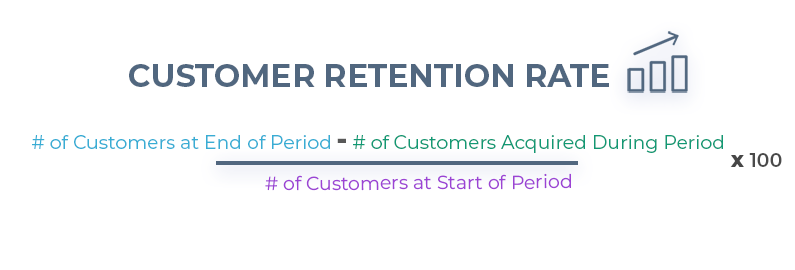
How to calculate First Time Response Time

Average Resolution Time (ART)

The ART shares the same space with the FRT, it is the average period that your Customer Service team takes to solve questions, needs, or issues and must remain as low and as solid as possible to ensure that clients are satisfied and returning.

How to calculate Average Resolution Time (ART)

Customer Satisfaction Score (CSAT)

The CSAT stand very close to the top in this list, it stands as the KPI which helps you identify how your clients perceive the quality and effectiveness of Customer Service by asking key questions such as:

  • How satisfied are you with your interaction with Customer Service?
  • How satisfied are you with the product/service?
  • Would you have any recommendations or comments about this interaction?
  • Would you have any recommendations or comments about the product/service?
How to calculate Customer Satisfaction Score (CSAT)
Learn more about services
Request Now

Net Promoter Score (NPS)

The NPS is a measurement that together with the CSAT allows you to understand the full scope of your current client base through their satisfaction and how likely it would be for them to recommend this service to family and friends, a successful Customer Service interaction may not always produce a promoter but it will prevent detractors from arising.

How to calculate Net Promoter Score (NPS)

Customer Retention Rate (CRR)

The CRR may be the last in the list but it is as important as the previous items Customer Service KPIs on this list. Customer Retention is achieved through excellent service and ensuring that all client expectations are met.

How to calculate Customer Retention Rate (CRR)

From these points, we can identify how the procedures in place effectively impact the relationship between your business and your client; if these KPIs aren’t met, then actions should be taken to identify any pitfalls or improvements.

Missing out on the FRT or ART can produce a chain reaction in how your clients interact with your service; they may avoid contacting Customer Service altogether and find out other services that provide a faster and more effective response time.

The CSAT is the microscope that gives you the best insight on how satisfied your clients are with their interaction with Customer Service and your current selection of services; if this KPI is not addressed accordingly or not attended at all, your clients may feel ignored and that their opinion is of no concern to your business which in turn may produce detractors.

Interactions Would Take Your Business To The Next Level

On the other hand, by ignoring the NPS, there is ample space for a detractor base to be built and impact revenue and business; it is easier for a detractor to be born through Customer Service interactions when there are wrong procedures or concerns are ignored.

To make it clear in numbers, 41% of consumers will spend less money if they have a terrible experience; for B2B interactions, this raises to 51%, but the main difference would be that they would instead take their business elsewhere than continue with the interactions.

These numbers, in turn, will tell us that at least 41 billion dollars are lost due to these detractors, and this is a number that is only focused on the United States. [1]

Finally, ignoring the CRR allows clients to step out of the spotlight without their needs being met, their comments being heard, or their opinion is considered, building a more extensive base of detractors that generally affect the business.

Suppose the Customer Service KPIs are not assessed. In that case, there is always the possibility of losing critical business and eventually getting behind the race against competitors who take note of what is happening in their most crucial department by looking at these indicators.

Ready to jump into giving your clients world-class Customer Service and ensuring that all these KPIs are met and exceeded?

Learn more about services
Request Now

[1] https://www.retently.com/blog/nps-detractor/

https://redialbpo.com/wp-content/uploads/2020/11/5-Customer-Service-KPIs-You-Should-Be-Tracking_rev1.jpg 300 795 Veronica Mascareno https://redialbpo.com/wp-content/uploads/2026/04/rbpo_logo_color_large_black_600x209-300x105.png Veronica Mascareno2020-11-24 23:40:002026-05-22 14:19:295 Customer Service KPIs You Should Be Tracking
Page 2 of 212

Search our CX Blog

Recent Posts

  • Promotional banner for the Dykem a 2C26 13th Annual DSO Conference: July 15–17, 2026 in Denver, CO with calendar and location icons and the Redial logo.Redial BPO Heads to the Dykema DSO Conference 2026 — Denver, July 15–17July 2, 2026 - 10:09 am
  • CCW Las Vegas 22-25 June, 2026 - Redial BPO - Official SponsorRedial BPO Is an Official Sponsor of CCW Las Vegas 2026 — and We’re Bringing Something BigMay 19, 2026 - 12:59 pm
  • Banner for a report: The State of Insurance Verification 2026; subtitle notes AI, staffing pressure, and denials; stethoscope on the left with Redial logo.Prior Authorization Outsourcing: How Healthcare Practices Are Cutting Denials and Reclaiming Clinical TimeApril 24, 2026 - 11:17 am
  • Auto Finance Summit East 2026Redial BPO attending Auto Finance Summit East 2026April 13, 2026 - 1:02 pm
  • Redial BPO’s 9th AnniversaryCelebrating Redial BPO’s 9th Anniversary: Nine Years of Growth, People, and PurposeMarch 13, 2026 - 4:46 pm

Categories

  • Awards
  • BPO
  • Collections service
  • Customer Service
  • Customer Support
  • CX and Services
  • Events
  • Healthcare
  • Industries
  • Insurance Verification
  • Live Chat
  • News
  • Omnichannel
  • Redial Culture

PCI Logo Redial BPO

Nearshore & offshore call-center teams that protect your brand — PCI DSS and HIPAA-compliant, and ready to scale with your volume.

Services

  • Customer Service
  • Technical Support
  • Inbound & Outbound Sales
  • Debt Collection
  • Back-Office Support
  • Lead Generation
  • Live Chat & Email
  • All Services →

Industries

  • Financial Services
  • Healthcare
  • Retail & E-commerce
  • Technology & SaaS
  • Telecommunications
  • Travel & Hospitality
  • Logistics
  • All Industries →

Locations

  • Mexico
  • South Africa
  • Philippines
  • All Locations →

Company

  • Leadership
  • Blog
  • Contact Us
  • Join Redial!
  • Get a Quote
Redial BPO Logo

© 2026 Redial. All Rights Reserved.

  • Privacy Policy
  • Terms of Use

Scroll to top